TL;DR: After a house fire in Bakersfield, your first calls go to 911 (if you haven’t already), your insurance company, and a licensed fire damage restoration contractor. Do not re-enter until the fire department clears the structure. A certified crew will secure the property, remove soot and smoke residue, dry out any water from suppression efforts, and rebuild what was lost. The faster you act, the less secondary damage you face.
If you’re reading this after a fire at your Bakersfield home, the fire is out and you’re trying to figure out what comes next. Maybe it was a kitchen fire that spread to the cabinets. Maybe a space heater ignited drywall in a bedroom during tule fog season. Either way, the structure is standing and you need a plan. Here’s what the process actually looks like, what your insurance will likely cover, and what mistakes cost homeowners the most money. Full service details are on the Bakersfield fire damage restoration page.
What Should You Do in the First 24 Hours After a House Fire?
In the first 24 hours, secure the property, document everything, and contact your insurer before any cleanup begins. Acting fast limits secondary damage, but acting without documentation can hurt your claim.
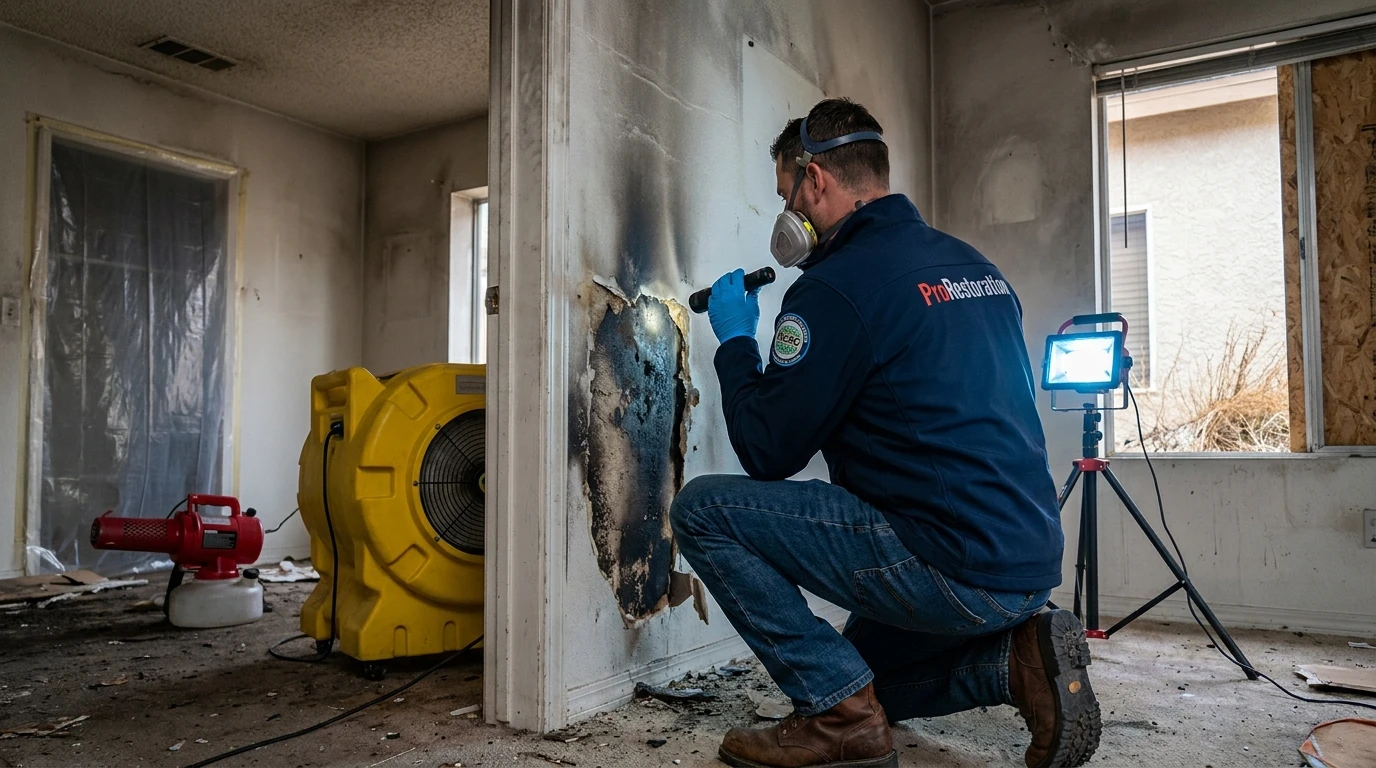
Once the fire department clears you to re-enter, take photos and video of every affected room before anything is moved or cleaned. Capture soot lines on walls, water damage from suppression hoses, damaged contents, and any structural issues. This documentation is your evidence for the insurance adjuster.
Call your homeowners insurance company to open a claim. They will assign an adjuster and may recommend a preferred vendor, but you have the right to choose your own licensed contractor in California. Then call a licensed fire damage restoration company to board up broken windows, tarp any compromised roof sections, and begin the assessment. Leaving a fire-damaged home unsecured overnight invites vandalism and weather damage on top of the fire loss.
Bakersfield’s dry heat in summer accelerates soot bonding to surfaces. The longer soot sits on drywall, wood trim, and HVAC components, the harder it is to remove and the more likely it is to cause permanent staining. Same-day response matters here.
What Does the Fire Damage Restoration Process Look Like?
Fire damage restoration follows a defined sequence: emergency securing, damage assessment, water extraction (if needed), soot and smoke removal, structural drying, odor elimination, and reconstruction. Most residential jobs in Bakersfield run two to six weeks depending on the scope.
Here is how a typical job moves:
- Emergency board-up and tarping. Windows, doors, and roof penetrations get secured so the property is weathertight and safe. This happens within hours of your call.
- Assessment and scope of work. A certified technician walks every affected area with a moisture meter and documents the damage category. The written scope goes to your insurer before work begins.
- Water extraction and structural drying. Suppression water from fire hoses is Category 1 (clean) water, but it soaks into subfloors, wall cavities, and insulation fast. Air movers and LGR dehumidifiers run until moisture readings return to baseline, typically three to five days.
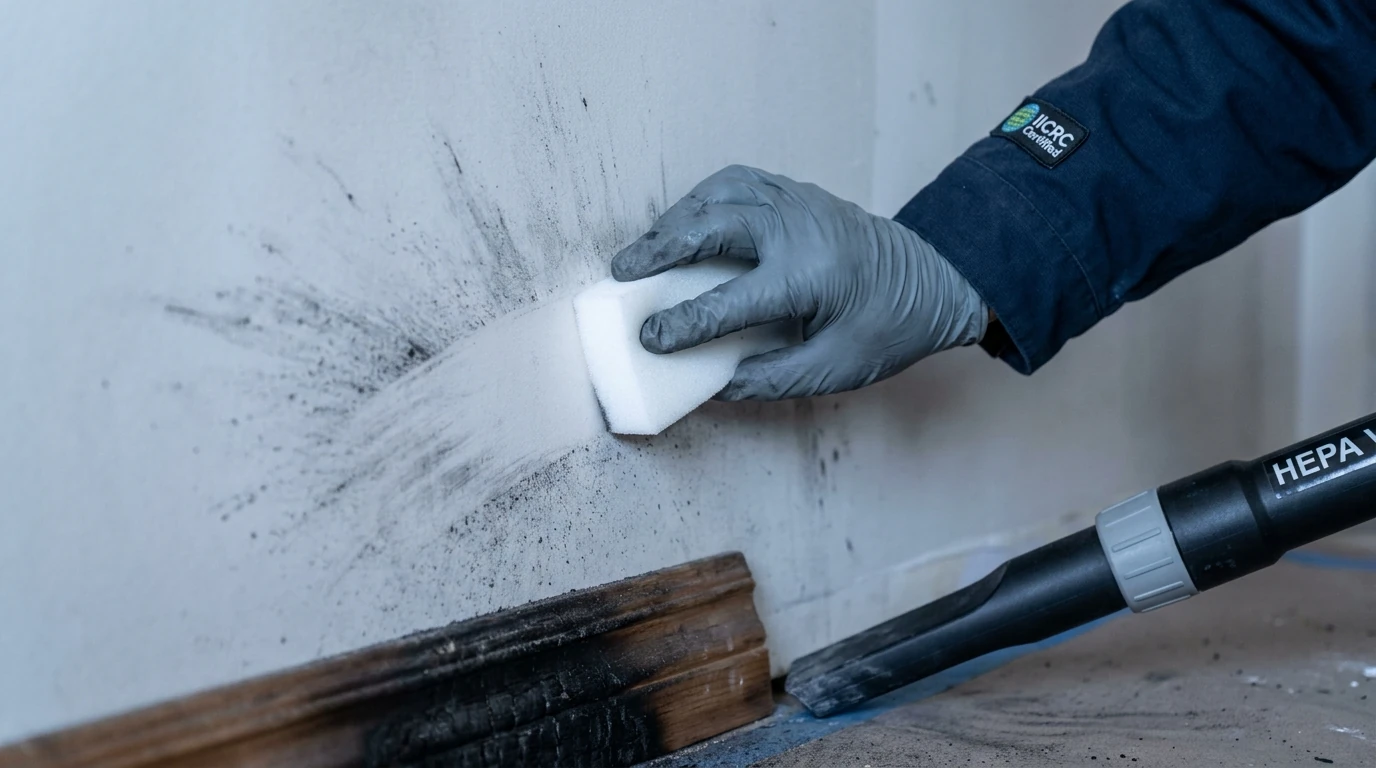
- Soot and smoke removal. Dry soot is removed first with HEPA vacuums and dry chemical sponges before any wet cleaning. Wet soot (from fires involving plastics or synthetics) requires chemical cleaning agents. Smoke residue inside HVAC ductwork is cleaned separately to prevent re-contaminating the home every time the system runs.
- Odor elimination. Smoke odor is not a surface problem. Molecules penetrate drywall, insulation, wood framing, and contents. Thermal fogging and hydroxyl generators break down odor compounds at the molecular level. Masking sprays do not work long-term. For a deeper look at why DIY odor removal usually fails, see How Professionals Remove Smoke Odor (and Why DIY Usually Fails).
- Reconstruction. Charred framing, damaged drywall, flooring, cabinets, and fixtures are rebuilt to pre-loss condition. In California, any reconstruction touching lead paint (common in Oleander, Westchester, and East Bakersfield homes built before 1978) requires an EPA Lead-Safe Certified Firm.
The IICRC S700 Standard for Professional Smoke and Soot Restoration governs how certified technicians assess and clean fire-damaged structures. If your contractor cannot reference this standard, ask why.
Will Homeowners Insurance Cover Fire Damage Restoration in Bakersfield?
Most standard homeowners policies cover fire damage restoration, including structural repairs, smoke and soot cleanup, temporary housing (ALE coverage), and contents replacement. The key is proper documentation before any work begins.
California homeowners policies typically include:
- Dwelling coverage (Coverage A): Pays for structural repairs to the home itself, including framing, drywall, roofing, and systems like HVAC.
- Personal property coverage (Coverage C): Covers contents damaged by fire, smoke, or suppression water. Document every item before anything is discarded.
- Additional living expenses (ALE/Coverage D): Pays for a hotel or rental while the home is being restored. Keep every receipt.
- Smoke and soot cleanup: Covered under most policies as part of the fire loss, even in rooms the fire never reached.
What insurers scrutinize: pre-existing damage, deferred maintenance that contributed to the fire, and any work done before the adjuster inspects. Do not start demolition or cleanup until the adjuster has documented the scene, or until your contractor has a written authorization from the insurer.
The California Department of Insurance provides guidance on your rights after a fire loss at insurance.ca.gov. If your claim is delayed or underpaid, you have the right to request a re-inspection and to hire a public adjuster.
For a broader look at navigating property damage insurance claims, the Storm Damage Insurance Claim Checklist covers documentation steps that apply to fire claims as well.
What Are the Biggest Mistakes Bakersfield Homeowners Make After a Fire?
The most costly mistake is starting cleanup before the insurance adjuster documents the scene. The second is hiring an unlicensed contractor who skips the soot-removal sequence or fails to address smoke inside the HVAC system.
Here are the mistakes that come up most often on Bakersfield fire jobs:
Airing out the house without cleaning first. Opening windows moves smoke molecules into wall cavities and HVAC ductwork. Ventilation is part of the process, but it happens after soot is removed, not before.
Wiping soot with wet cloths. Dry soot smears and bonds permanently when wet. The correct sequence is dry removal first (HEPA vacuum, dry sponge), then wet chemical cleaning. A homeowner who wipes soot with a damp paper towel before the crew arrives can create a staining problem that wasn’t there before.
Discarding damaged contents before the adjuster visits. Every item you throw away without documentation is a contents claim you cannot file. Photograph everything, make a written inventory, and let the adjuster see it.
Assuming the HVAC system is fine. Smoke travels through return-air ducts instantly. A kitchen fire in a Stockdale Estates home can deposit soot on every register in the house. If the HVAC runs after a fire without duct cleaning, it redistributes smoke residue into every room.
Hiring based on price alone. California CSLB license verification takes two minutes at cslb.ca.gov. An unlicensed contractor cannot pull permits for reconstruction, which means the work cannot be inspected and may not be covered by your insurer.
Who Should You Call for Fire Damage Restoration in Bakersfield?
For fire damage restoration in Bakersfield, call ProRestoration Services at (661) 393-9306. The team is IICRC Certified, EPA Lead-Safe Certified, licensed by the California Contractors State License Board (license 960566), and available 24/7.
ProRestoration and its sister company All Pro Plumbing operate as one team, which matters on fire jobs more than most homeowners expect. Fires often involve burst supply lines, suppression water in walls, or plumbing that needs repair before reconstruction can begin. One call handles the fire restoration and the plumbing, with no second contractor to coordinate. That is the “One Call Does It All” model in practice.
When you call, have your insurance policy number ready, the fire department incident report number if you have it, and a rough description of which rooms were affected. The crew will handle the rest, from the initial board-up through the final walk-through with your adjuster.
For a broader look at how to evaluate any restoration contractor before you sign, see How To Choose a Restoration Company in Bakersfield (Without Getting Burned).
About ProRestoration Services
ProRestoration Services is an IICRC Certified, EPA Lead-Safe Certified, and BBB Accredited restoration company serving Bakersfield and Kern County (CSLB license 960566). Their crews handle fire damage restoration, smoke damage restoration, soot removal, odor removal, water damage restoration, mold remediation, storm damage restoration, and full reconstruction across Bakersfield’s neighborhoods, from Oleander and Westchester to Seven Oaks and Riverlakes Ranch. ProRestoration operates alongside sister company All Pro Plumbing so that plumbing repairs and property restoration are coordinated from a single call.