TL;DR: A standalone mold inspection in Bakersfield typically costs $200 to $450, and $450 to $800 if it includes air quality or surface sampling sent to a lab. Clearance testing after remediation runs $250 to $500. If you can already see mold or smell it strongly, you often don’t need a separate inspection first, you need a remediation estimate.
If your evaporative cooler leaked into the attic last summer, or you’ve still got a musty smell lingering near a bathroom in an older Oleander or Westchester home, you’re probably trying to figure out whether you need a $300 inspection or you can skip straight to a remediation quote. The honest answer depends on whether you can actually see the mold or you’re chasing a smell with no visible source.
How much does a mold inspection cost in Bakersfield?
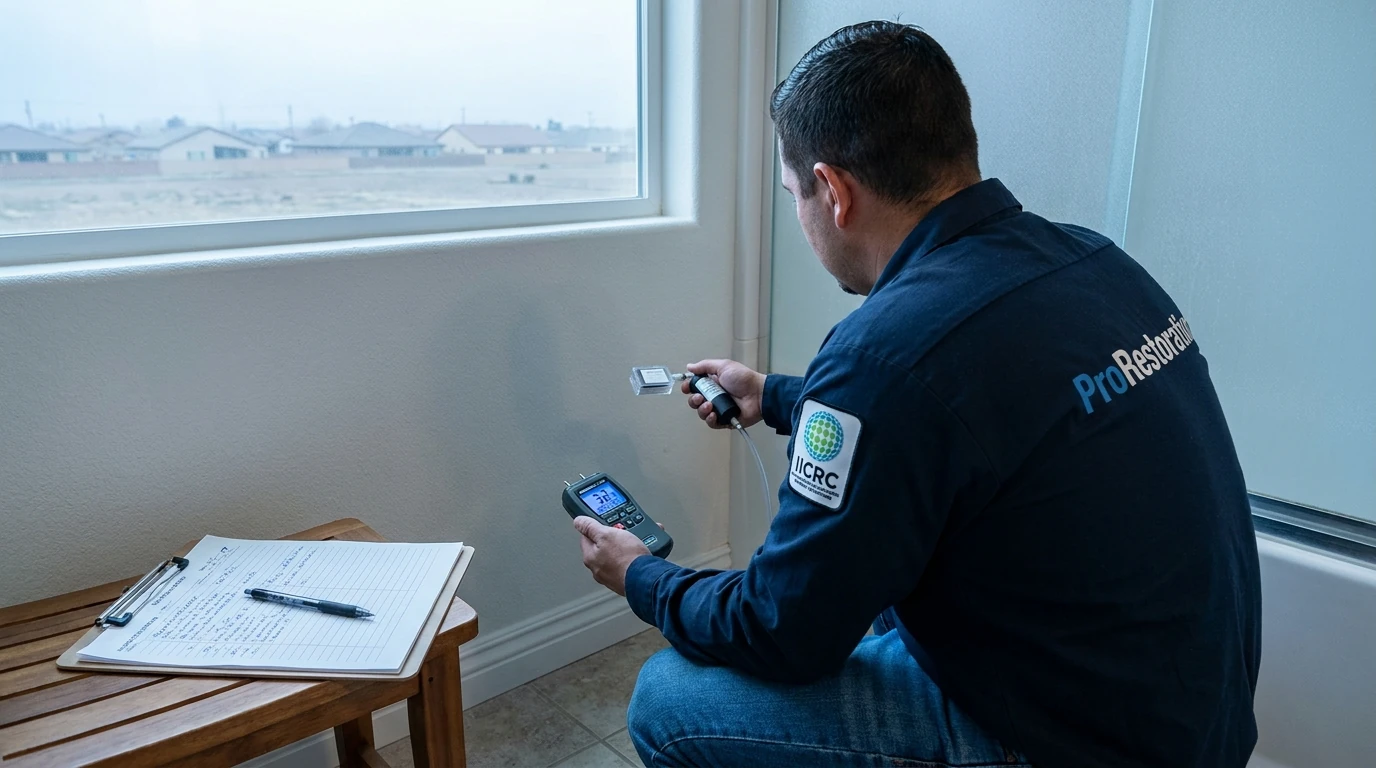
A visual mold inspection alone, where an inspector walks the property, checks moisture-prone areas with a meter, and documents what they find, typically costs $200 to $450 in the Bakersfield area. Add lab-analyzed air or surface samples and the price climbs to $450 to $800.
Pricing scales with how many samples get pulled and how large the property is. A single bathroom or laundry room check costs less than a whole-house inspection after a slab leak, which is common here given Bakersfield’s hard water and slab-on-grade construction.
| Scope | Typical Cost |
|---|---|
| Visual inspection only, no lab samples | $200 - $400 |
| Inspection + 2-3 air quality samples | $350 - $650 |
| Inspection + surface/tape-lift samples | $300 - $550 |
| Full inspection + air and surface samples, whole house | $500 - $800 |
| Clearance testing after remediation | $250 - $500 |
These are typical industry ranges for the Kern County market, not a quote. Every property is different, and ProRestoration Services provides a written scope before any work begins.
Mold inspection vs. mold testing: what’s the difference?
A mold inspection is the visual walkthrough and moisture investigation; mold testing is the lab-analyzed sampling that confirms species and spore counts. You can get an inspection without testing, but testing without an inspection rarely tells you anything useful on its own.
An inspector uses a moisture meter, thermal imaging in some cases, and a trained eye to find where water is getting in, whether that’s a roof leak around an aging swamp cooler, a slow slab leak, or condensation behind a bathroom wall. That’s the inspection. If mold is visible, many inspectors will tell you testing isn’t necessary, you already have your answer and can move to remediation.
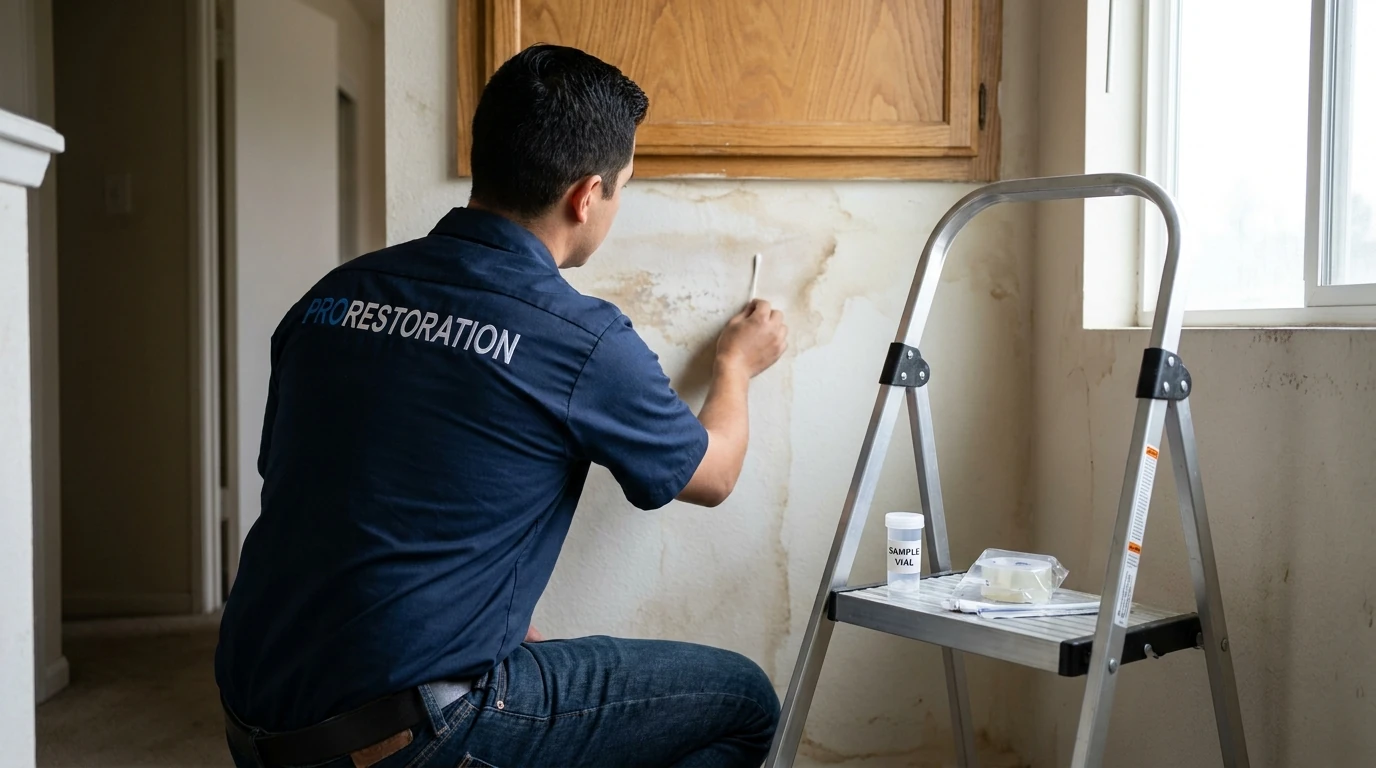
Testing adds value when mold isn’t visible but someone in the home has health concerns, when a landlord or buyer needs lab documentation, or after remediation to confirm the work actually cleared the problem. Our own breakdown of how to test for mold covers the DIY kit vs. professional sampling tradeoff in more detail if you’re trying to decide which route makes sense for your situation.
What does clearance testing cost after remediation?
Clearance testing after remediation typically costs $250 to $500 and confirms the remediated area is back to a normal fungal ecology before containment comes down. It’s a separate service from the original inspection, usually done by a third-party tester for objectivity.
The process involves air samples taken inside the containment area and compared against an outdoor control sample. If spore counts and species match what you’d expect outdoors, the area passes. If not, the remediation crew re-cleans the affected zone before testing again. This step matters most for insurance claims, real estate transactions, and any job where a tenant or buyer will want documentation that the mold is actually gone, not just painted over.
Do you need an inspection, or do you already have enough evidence?
If you can see mold growth or smell a strong, persistent musty odor, you likely don’t need a separate inspection, you need a remediation scope. The California Department of Public Health notes that a musty odor without visible mold usually still points to a hidden moisture problem behind a wall or under flooring, which is exactly the kind of thing a trained inspector finds with a moisture meter even when nothing’s visible on the surface.
This comes up often in Bakersfield’s pre-1970 housing stock around Oleander, Westchester, and East Bakersfield, where original plumbing and attic-mounted evaporative coolers create slow leaks that go undetected for months. If you’ve got visible staining, a known water intrusion event, or our earlier post on signs of hidden mold matches what you’re seeing, skip the standalone inspection and request a remediation estimate directly, it saves you a step and a fee.
Where an inspection earns its cost: you smell something but see nothing, you’re buying or selling a home, a tenant has raised a health concern, or you want documentation for an insurance claim tied to a prior water loss. In those cases, start with the inspection so you know exactly what you’re dealing with before committing to a remediation scope.
If the inspection traces the moisture back to an active leak, whether that’s a slab leak, a failing supply line, or a roof penetration around a cooler unit, ProRestoration’s sister company, All Pro Plumbing, can fix the source while the same team handles the mold remediation. That’s the idea behind our “One Call Does It All” approach: one contractor fixes the leak, dries the structure, and remediates the mold, instead of juggling a plumber and a mold company separately.
If you’re past the inspection stage and already comparing remediation numbers, our mold remediation cost guide breaks down what Bakersfield homeowners typically pay once the scope is known. Request a mold inspection and get a written scope before any sampling or remediation work starts.
About ProRestoration Services
This post was written with input from the ProRestoration Services team, led by Jack Bispo. ProRestoration Services is an IICRC-certified, EPA Lead-Safe Certified Firm serving Bakersfield, CA and surrounding Kern County communities, licensed under CSLB #960566. The company handles mold inspection and testing, mold remediation, water damage restoration, and related reconstruction services, and works alongside its sister company, All Pro Plumbing, to resolve the plumbing source of a moisture problem and the resulting mold under one contract.
Need help now? Call ProRestoration Services at (661) 393-9306.