TL;DR: In California, roofing costs typically run from about $400 for a small patch to $8,000-$16,000 for a full asphalt shingle replacement on an average home, and $15,000-$40,000 for clay or concrete tile. The final number depends on material, roof size, pitch, and whether the decking underneath needs repair. Homeowners insurance usually covers damage from a sudden storm or fire but not routine wear, and a written scope protects both the repair and any claim.
If a windstorm peeled shingles off your roof last month, or your evaporative cooler has been dripping into the attic above the hallway, the first thing you want is a number, not a sales pitch. Roofing costs in California swing widely, from a $400 patch over a cracked vent boot to a five-figure tear-off and replacement on a tile roof. Before you schedule anyone to come out to your home in Oleander/Sunset or Westchester, here’s what the material, the roof’s condition, and your insurance policy actually do to that number, and how a roof repair connects to any water damage if a leak has already reached your drywall.
How Much Does Roofing Cost in CA?
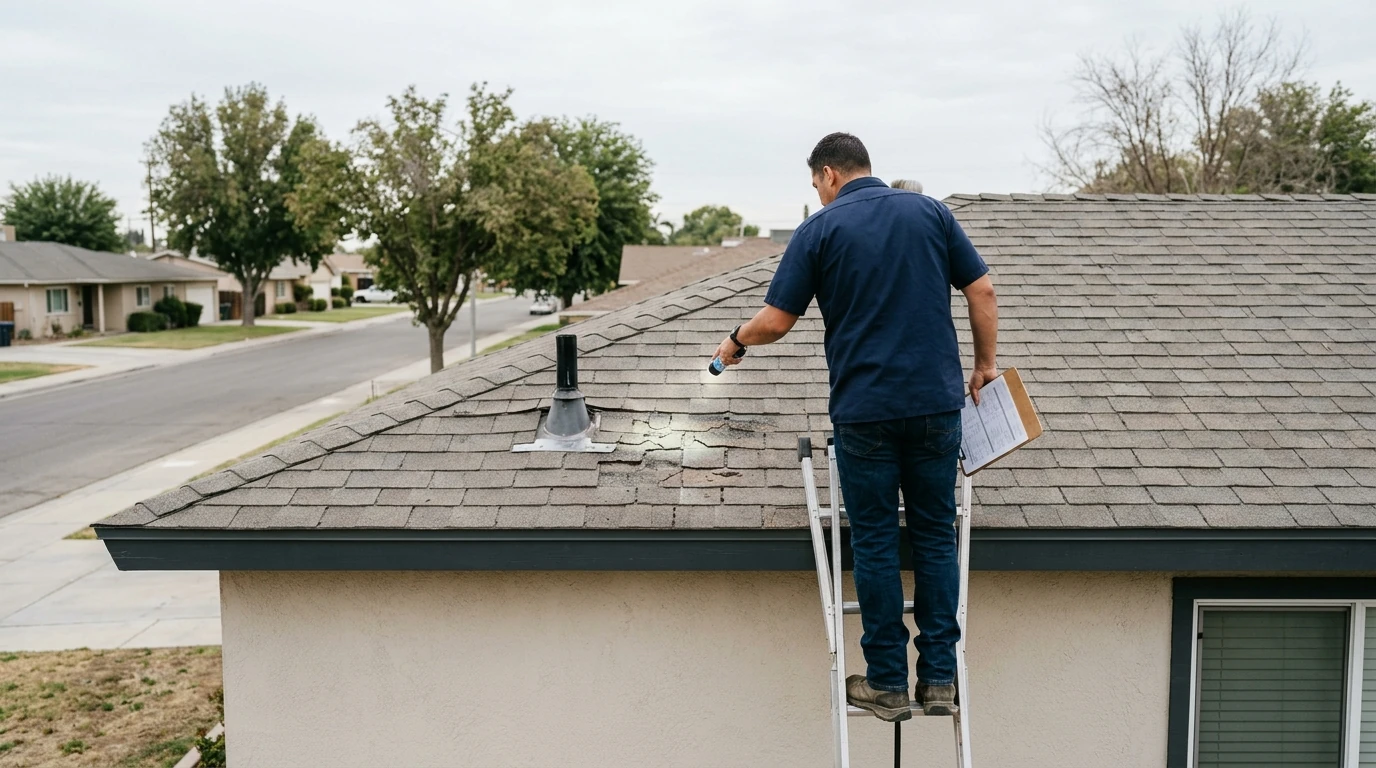
Most California homeowners pay between $400 and $16,000 for roofing work, depending on whether the job is a spot repair or a full replacement. Small repairs, patching a flashing leak or replacing a handful of broken shingles or tiles, typically run $400 to $1,500. A complete tear-off and replacement on an average 1,800 to 2,200 square foot home, the size common in Stockdale Estates and Seven Oaks, runs $8,000 to $16,000 for asphalt shingles and $15,000 to $40,000 for clay or concrete tile.
| Job Type | Typical CA Cost Range |
|---|---|
| Minor repair (flashing, vent boot, isolated leak) | $400 - $1,500 |
| Moderate repair (storm damage, multiple shingles or tiles) | $1,200 - $3,500 |
| Emergency tarp or board-up after storm damage | $300 - $800 |
| Asphalt shingle tear-off and replacement (average home) | $8,000 - $16,000 |
| Clay or concrete tile replacement | $15,000 - $40,000 |
| Flat or low-slope roof (additions, patio covers, garages) | $6,000 - $12,000 |
These are typical industry ranges, not a quote. Every roof is different, and ProRestoration Services provides a written scope of work before anything is torn off, so the number on paper matches the number on the invoice.
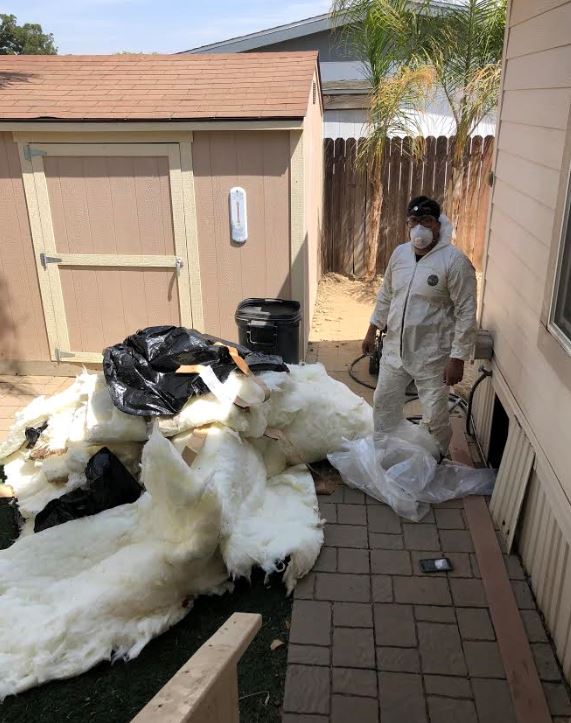
Recent job photo from ProRestoration Services.
What Drives the Cost of a Roof in California?
The biggest cost swings come from material, roof condition underneath, and local code requirements, not just square footage. A few specifics matter more than people expect.
- Material. Asphalt shingle is the cheapest option per square. Clay and concrete tile, common on older Bakersfield roofs, cost more to buy and more to install because of the extra weight and labor.
- Decking condition. Pre-1970 homes in Oleander, Westchester, and East Bakersfield often have original roof decking. If it’s rotted or delaminated under the surface layer, replacing it adds materially to the job and usually isn’t visible until tear-off starts.
- Tear-off vs. overlay. Code and most manufacturers only allow one layer of shingles over an existing layer in limited cases. A full tear-off costs more but is usually the right call on a second layer or a roof with hidden damage.
- Fire-hazard severity zone requirements. Properties in designated wildland-urban interface areas, which includes parts of the Tehachapi and Lake Isabella service areas, may require Class A fire-rated roofing materials under state and local code, which can shift the material choice and cost.
- Permits and ventilation upgrades. A permitted re-roof in Kern County typically requires updated attic ventilation and compliance with current energy code, adding a modest line item most homeowners don’t anticipate until the estimate.
Will Homeowners Insurance Pay for a New Roof?
Most homeowners policies cover roof damage caused by a sudden, specific event, such as wind, hail, or a fallen tree, but not damage from age, wear, or deferred maintenance. The distinction is the whole claim: an insurer that sees years of granule loss and curling shingles will usually deny the claim as a maintenance issue, even if the leak just started.
To protect a legitimate storm claim, document the damage with photos before any tarp goes up, and keep the tarping and repair invoices. Most policies treat emergency tarping as a mitigation expense that helps, not hurts, the claim. For the broader rules on what a standard policy covers, see the Insurance Information Institute’s guide on which disasters are covered by homeowners insurance. If you’re working through a claim right now, our storm damage insurance claim checklist walks through documentation order.
ProRestoration Services writes a detailed scope that separates storm damage from pre-existing wear, which is the document most adjusters want before they’ll approve a line item. The crew photographs and documents the roof before touching it, which matters whether the claim goes smoothly or gets questioned.
What Happens During a Roof Replacement?
A roof replacement in California generally moves through the same sequence regardless of material, though tile and flat roofs add steps.
- Inspection and written scope. A crew walks the roof, checks the decking from the attic side where possible, and documents existing damage with photos.
- Material selection. Homeowner chooses shingle, tile, or flat-roof material based on budget, HOA rules, and fire-zone code if applicable.
- Permit pull. Kern County and most incorporated cities require a permit for a full re-roof; this is handled before work starts.
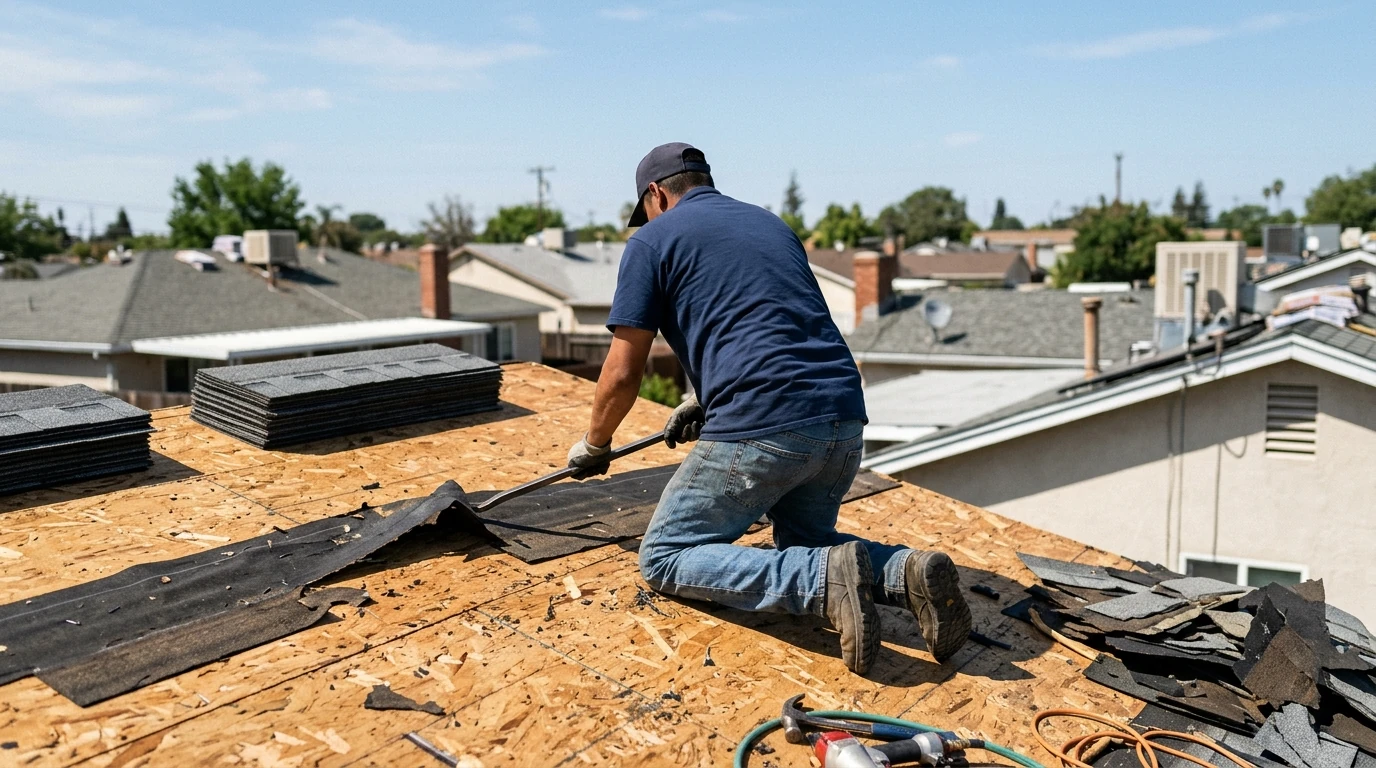
- Tear-off. Old material comes off down to the decking, and any rotted or delaminated sheathing gets identified and replaced.
- Underlayment and installation. New underlayment, flashing, and the chosen roofing material go on to current code, including ventilation.
- Final inspection and cleanup. The job closes with a county or city inspection where required and a full site cleanup, including magnetic nail sweeps.
If you’re licensed-contractor shopping, California requires an active CSLB license for any roofing job over $500 in labor and materials. You can verify any contractor’s license status before signing anything, and the CSLB’s guide to hiring a contractor is worth the five minutes.
A roof leak rarely stops at the roof. Water that gets past flashing or a cracked tile runs down into attic insulation, ceiling drywall, and sometimes framing, especially in the older galvanized-plumbing homes around East Bakersfield where a slow leak can go unnoticed for weeks. That’s the whole idea behind ProRestoration’s “One Call Does It All” approach: the same team that tarps and replaces the roof also handles the water damage restoration inside, and if a plumbing line was involved, sister company All Pro Plumbing handles that repair too. No second contractor, no gap between trades, one scope of work covering the roof, the drywall, and the plumbing if it’s part of the loss.
About ProRestoration Services
ProRestoration Services is an IICRC-certified, EPA Lead-Safe Certified firm serving Bakersfield and Kern County, licensed under CSLB License #960566. The company is available 24/7 and handles roofing, storm damage restoration, emergency board-up and tarping, water damage restoration, and reconstruction under one roof, which means a storm-damaged roof and the water intrusion it caused don’t require two separate contractors.
Need help now? Call ProRestoration Services at (661) 393-9306.