TL;DR: A sewage backup in your house is a Category 3 (black water) emergency. Turn off the water supply if sewage is still flowing, evacuate the affected area, and call a certified restoration company before touching anything. Black water contains raw sewage, bacteria, and pathogens that make DIY cleanup genuinely dangerous. Most standard homeowners policies exclude sewer backup unless you added a water backup endorsement, check your declarations page now, before you call your insurer.
You walked into your bathroom and found sewage sitting in the tub. Or you noticed a slow gurgle from the floor drain in the laundry room, and then it wasn’t slow anymore. In slab-on-grade homes, which describes most of Kern County’s housing stock, there’s no basement to absorb the overflow. The sewage comes up through the lowest fixture in the house, usually a bathtub, shower, or floor drain, and spreads fast across tile, into grout lines, and under baseboards before most people realize what’s happening. Here’s exactly what to do, in order.
What should I do first when sewage backs up in my house?
Stop the source, get people out, and don’t run any water. Those three steps in the first ten minutes limit how far the contamination spreads.
First, stop using every plumbing fixture in the house immediately. Flushing a toilet or running the sink when the main line is blocked pushes more sewage into the living space. If you can see that sewage is still actively flowing, shut off the main water supply valve. In most Kern County homes it’s near the meter at the street or on the exterior wall near the front hose bib.
Second, get people and pets out of the affected rooms. Category 3 water, also called black water, is defined by the IICRC S500 standard as water that contains sewage, pathogens, or other grossly contaminated material. Direct contact or even inhaling the air in a heavily contaminated room carries real health risk, especially for children, elderly adults, or anyone immunocompromised.
Third, don’t run fans, don’t mop, and don’t try to shop-vac the material. Fans aerosolize the contamination. A regular wet-vac is not rated for black water and will spread pathogens through its exhaust. Leave the space as-is and call a certified restoration company.
Is sewage backup a DIY cleanup job?
No. Category 3 water requires professional remediation, and most restoration contractors and insurers will not accept a partial DIY cleanup as a starting point.
The EPA’s guidance on mold and water damage draws a clear line between clean water and contaminated water cleanup, and sewage sits at the far end of that line. The issue isn’t just the visible material. Sewage soaks into porous surfaces within minutes: drywall, wood subfloor, carpet padding, and even the paper facing on insulation. Those materials cannot be disinfected in place, they have to be removed.
Here’s what professional sewage cleanup actually involves:
- Containment. The affected area is sealed off with poly sheeting and put under negative air pressure using a HEPA air scrubber. This keeps contaminated air from migrating to clean parts of the house.
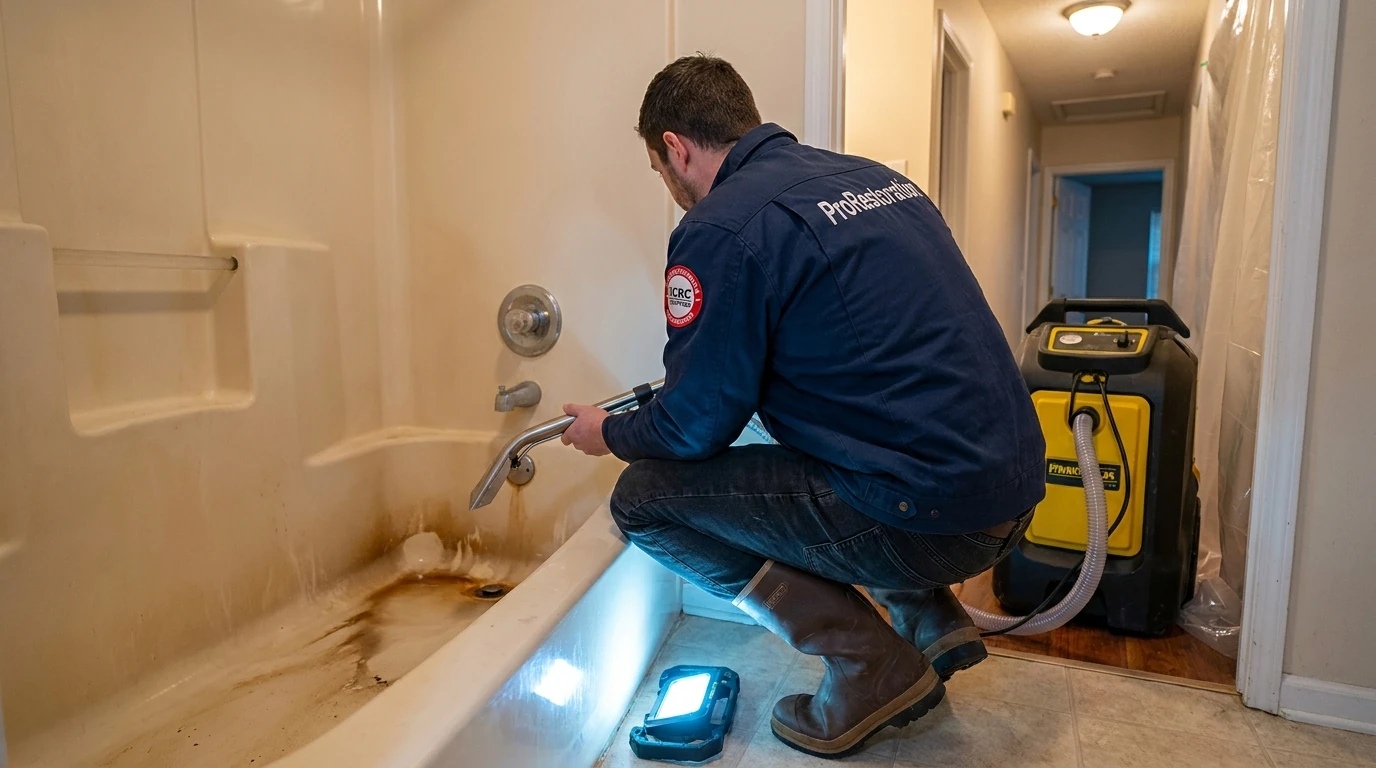
- Extraction. Truck-mounted or portable extraction equipment removes the standing sewage. This is not a shop-vac, it’s commercial-grade equipment rated for Category 3 material.
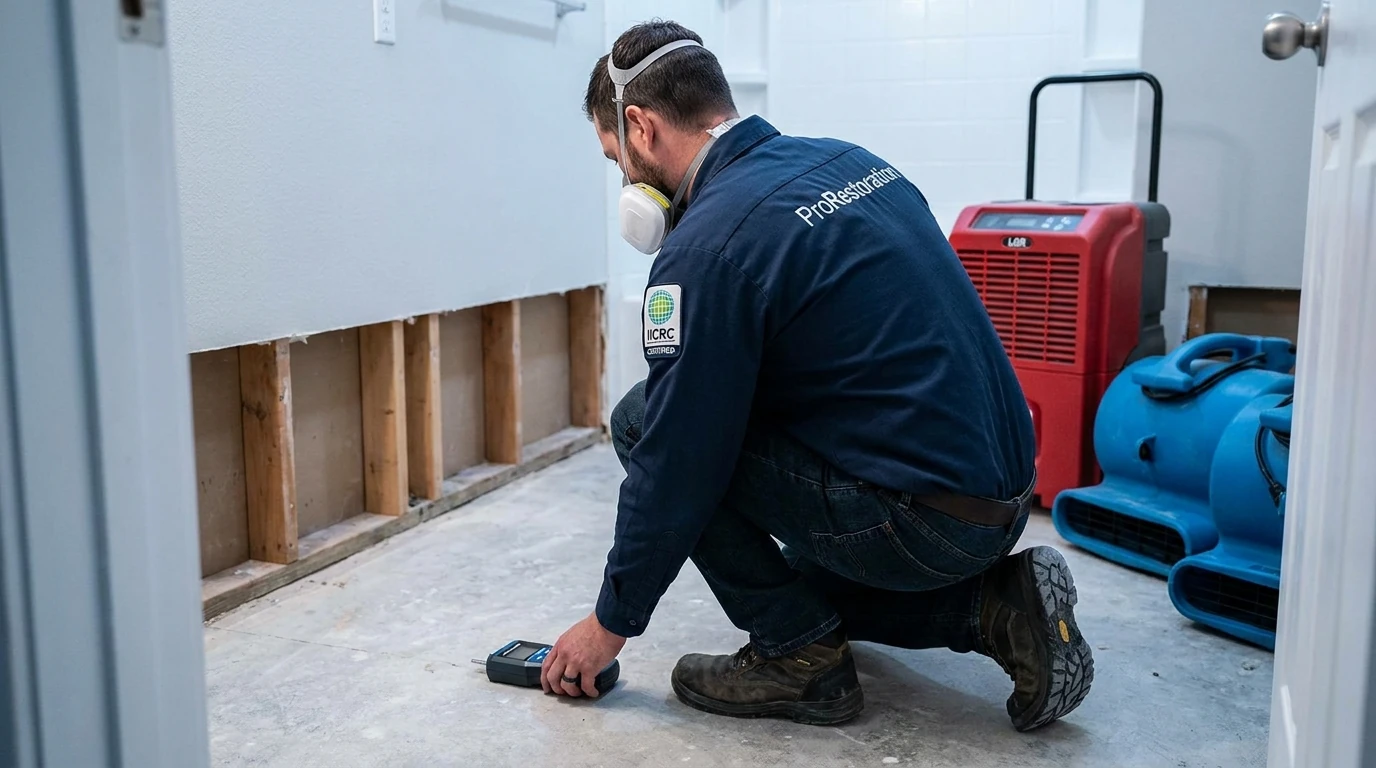
- Demo and removal. Porous materials that contacted the sewage are removed: drywall to a height above the waterline, baseboards, carpet, pad, and sometimes subfloor sections. There is no safe way to disinfect these in place.
- Antimicrobial treatment. Hard surfaces (concrete slab, tile, framing studs) are treated with EPA-registered antimicrobial agents and allowed to dwell.
- Drying. Commercial LGR dehumidifiers and air movers dry the structural cavity. Moisture readings are logged daily until the structure reaches its dry standard per the IICRC S500.
- Clearance. A final inspection confirms the space is dry and decontaminated before any reconstruction begins.
For persistent odor after the structural work is done, odor removal using hydroxyl generators or thermal fogging addresses what antimicrobials alone cannot reach inside wall cavities and ductwork.
Is this my sewer line or the city’s problem?
The answer depends on where the blockage is, and it matters for both liability and insurance.
The sewer lateral, the pipe that runs from your house to the city main in the street, is typically the homeowner’s responsibility from the foundation to the property line, and sometimes all the way to the main. If the blockage is in your lateral, the repair and cleanup cost falls on you. If the city’s main line backed up and pushed sewage into your lateral and then your house, the city may share liability, but you’ll need documentation to pursue that.
In Oildale and older parts of East Bakersfield, the most common culprits are cast-iron laterals that have corroded and collapsed, and Orangeburg pipe, a fiber-and-pitch material installed in the 1940s through 1960s that softens and deforms over time. A plumber’s camera inspection of the lateral tells you exactly where the failure is. If your restoration company and plumber are the same team, that inspection happens as part of the same call, not a separate appointment. ProRestoration Services works alongside All Pro Plumbing so the pipe diagnosis and the water damage cleanup happen together, one call, no second contractor to coordinate.
Does homeowners insurance cover a sewage backup?
Standard homeowners policies almost never cover sewage backup by default. You need a water backup endorsement, and many homeowners don’t realize they don’t have one until they’re standing in contaminated water.
Here’s how to read your policy quickly:
- Pull up your declarations page and look for “water backup,” “sewer backup,” or “service line” endorsement.
- If it’s not listed, your standard policy almost certainly excludes this loss.
- If you have the endorsement, typical coverage limits run $5,000 to $25,000 depending on what you purchased. That may not cover full remediation and reconstruction on a significant backup.
For a broader breakdown of what homeowners policies cover and exclude for water-related losses, the post Does Homeowners Insurance Cover Water Damage? walks through the categories in plain language.
If you do have the endorsement, documentation is everything. Before any material is removed, a professional restoration company should photograph and log every affected surface, take moisture readings, and produce a written scope of work. That scope is what your adjuster reviews. Skipping professional documentation, or starting DIY cleanup before an adjuster can inspect, is the most common reason sewage backup claims get reduced or denied.
What should I do next if sewage backed up in my house?
Call a certified restoration company that handles Category 3 water, and do it within the first few hours. The longer sewage sits in contact with porous materials, the deeper it penetrates and the more material has to be removed.
When you call, have this information ready:
- Which fixtures are affected and when you first noticed the backup
- Whether sewage is still flowing or has stopped
- Whether you’ve already shut off the water supply
- Your insurance carrier and policy number (they’ll ask)
After the call, stay out of the contaminated area. If the backup reached an HVAC return vent or air handler, turn off the HVAC system, running it can pull contaminated air through the duct system and spread it to clean rooms. For a broader look at what the first hours of any water emergency look like, What to Do in the First 24 Hours After Water Damage covers the sequence in detail.
ProRestoration Services is IICRC-certified, licensed by the California Contractors State License Board (license 960566), EPA Lead-Safe certified, and available 24/7 at (661) 393-9306. Their crews handle sewage cleanup, full water damage restoration, and odor removal across Bakersfield, Oildale, and the surrounding Kern County area, and because they operate alongside All Pro Plumbing, the lateral inspection and the remediation happen as one coordinated response. One call does it all.
About ProRestoration Services
ProRestoration Services is an IICRC-certified, EPA Lead-Safe Certified Firm serving Bakersfield, CA and Kern County (CSLB license 960566). Their team handles sewage cleanup, water damage restoration, mold remediation, odor removal, fire and smoke damage restoration, and full reconstruction. Working alongside sister company All Pro Plumbing, ProRestoration provides a single-call response that covers both the plumbing source and the property damage, no second contractor, no coordination gap. Reach them 24/7 at (661) 393-9306.