TL;DR: In Bakersfield, slab leak repair typically costs $500 to $6,000 depending on whether a plumber can spot-repair the pipe or needs to reroute the line above the slab, plus a separate detection fee of $200 to $600. Homeowners insurance usually covers the resulting water damage to flooring, drywall, and cabinetry, but not the plumbing repair itself. Coordinating the plumbing fix and the water damage dry-out on the same timeline keeps both invoices accurate and the insurance claim clean.
If your water bill jumped $60 to $100 last month, a warm patch showed up on the carpet near a baseboard in an Oleander, Westchester, or East Bakersfield home built before 1970, and you can’t find a dripping faucet anywhere, you’re likely dealing with a slab leak, not a mystery utility bill. Bakersfield’s slab-on-grade construction and hard water accelerate pinhole failures in old galvanized and copper lines running under the foundation. Before you call anyone, here’s what the repair itself actually costs, what detection involves, and where the plumbing bill ends and the water damage bill begins.
How Much Does Slab Leak Repair Cost in Bakersfield, CA?
Slab leak repair in Bakersfield typically costs $500 to $6,000, with most jobs landing between $1,200 and $3,500 once detection, a spot repair or short reroute, and slab patching are added together. A full repipe, usually needed once a pre-1970 home has had two or more galvanized pipe failures, runs $4,000 to $15,000 depending on square footage and fixture count.
The spread is wide because the fix depends on what’s actually under the slab. A single pinhole leak in an easy-to-reach section of copper pipe is a quick, contained job. A galvanized line that’s corroding from the inside, common in original plumbing in Oleander, Westchester, and parts of East Bakersfield, often means more than one leak is coming, which changes the math toward a reroute or repipe.
Slab Leak Detection: What Does It Cost and How Does It Work?
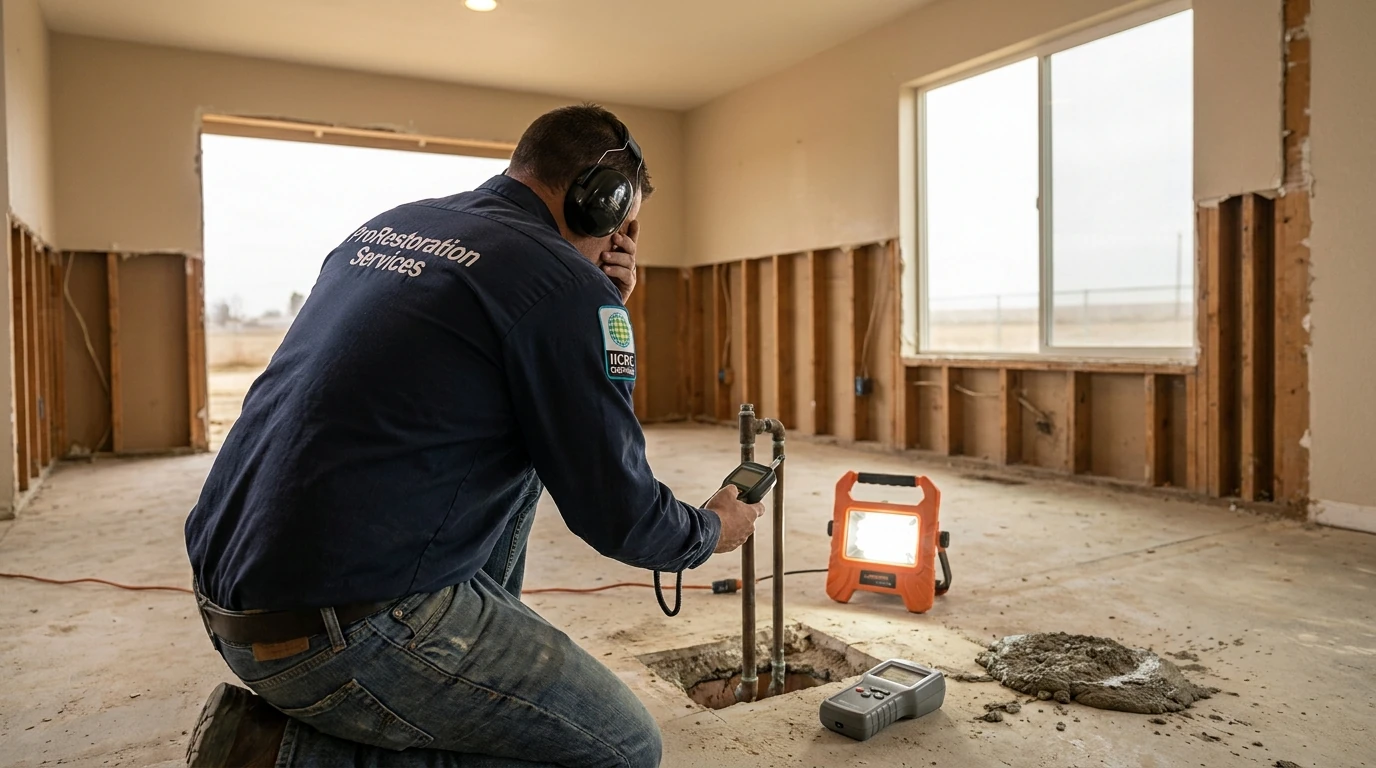
Professional slab leak detection in Bakersfield costs $200 to $600 and uses acoustic listening equipment, infrared thermal imaging, or a tracer gas test to locate the leak within a few inches, without jackhammering the whole slab to find it.
A plumber or leak detection specialist isolates each supply line, pressurizes it, and listens for the acoustic signature of escaping water through the concrete. Infrared cameras pick up the temperature difference where hot water is leaking into cool slab. This step matters because Bakersfield’s very hard water accelerates mineral buildup and pitting in old pipe, so a leak found in one spot doesn’t rule out a second one forming nearby. Skipping detection and guessing at the location almost always costs more in unnecessary concrete cutting.
Repair vs. Reroute: Which Fix Does a Bakersfield Home Actually Need?
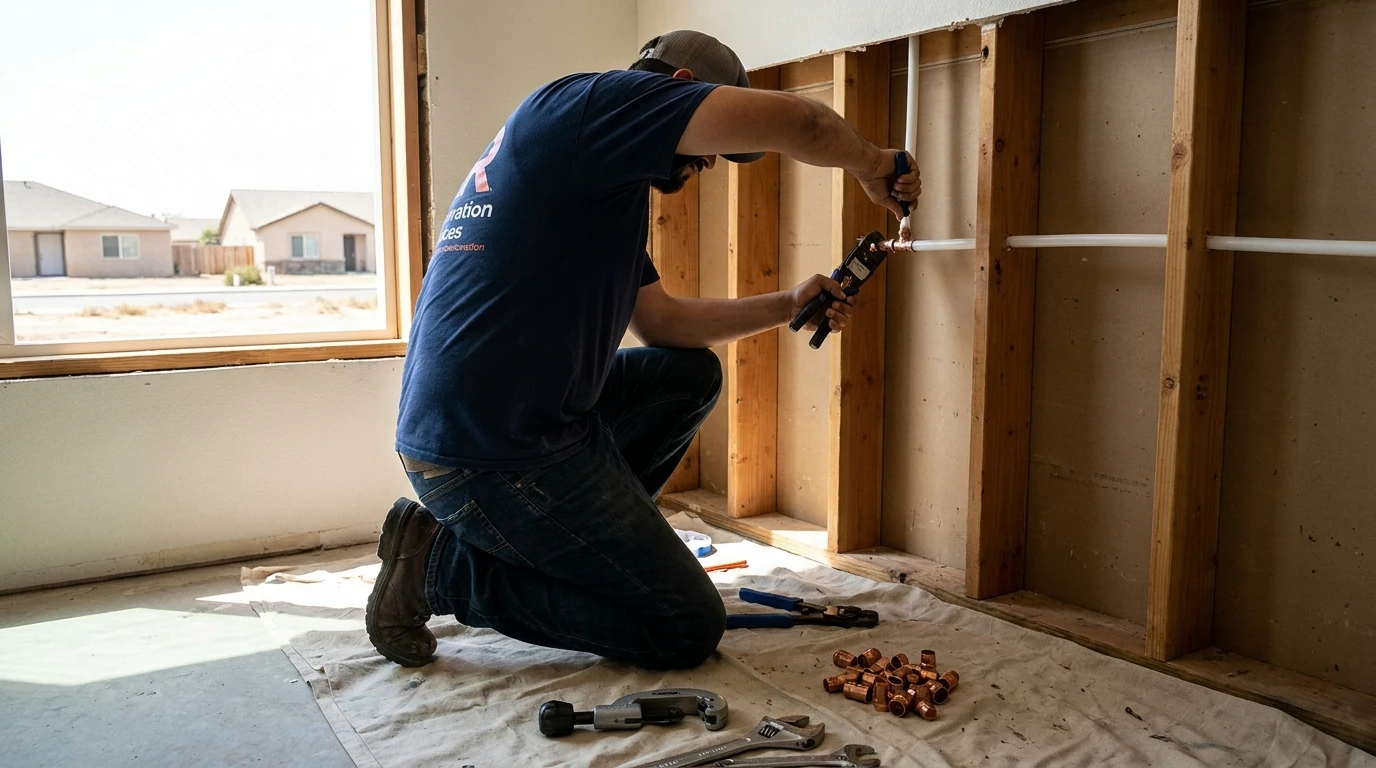
A spot repair cuts into the slab at the exact leak location and costs less upfront, while a reroute runs new copper or PEX piping through the attic or exterior walls and bypasses the slab line entirely, typically costing more at first but avoiding a second slab leak in failing old pipe a year or two later.
For a home with original 1950s or 1960s galvanized plumbing, most plumbers recommend a reroute or partial repipe rather than chasing leak after leak through the same brittle pipe. For a newer copper line with one isolated failure, a spot repair is usually the economical call. The decision comes down to pipe age, material, and how many prior leaks the home has had.
| Scenario | Typical Cost Range |
|---|---|
| Leak detection only | $200 - $600 |
| Spot repair (single slab penetration) | $500 - $2,500 |
| Partial reroute (one or two lines) | $2,000 - $6,000 |
| Full repipe (whole house) | $4,000 - $15,000 |
| Water damage restoration (flooring/drywall affected) | $1,500 - $7,000+ |
| Slab leak plus restoration, typical combined claim | $3,000 - $10,000+ |
Does Homeowners Insurance Cover a Slab Leak in Bakersfield?
Most homeowners policies cover the sudden water damage a slab leak causes to flooring, drywall, and cabinetry, but they exclude the cost of repairing or replacing the leaking pipe itself, since pipe failure is generally treated as a maintenance issue rather than a covered peril, per the Insurance Information Institute.
In practice, that means an adjuster will typically approve demolition, drying, and repair of the wet carpet, baseboards, and drywall caused by the leak, but the plumbing line item comes back as the homeowner’s responsibility. Keep the plumber’s invoice and the restoration invoice separate so the adjuster can see exactly what’s a covered loss and what’s a repair cost. Photograph the moisture-meter readings and the cut-out section of slab before it’s patched over; that documentation is what turns a disputed claim into an approved one.
What Should You Do First If You Suspect a Slab Leak?
Call a licensed plumber to confirm and locate the leak with proper detection equipment before any demolition starts, then bring in a water damage restoration crew the same day if there’s standing water, damp carpet, or a wet subfloor, since drying needs to start within 24 to 48 hours to keep mold from taking hold in the wall cavities.
In practice that’s two different trades on one timeline: a plumber to fix the pipe, and a restoration crew to extract water and dry the structure to the IICRC S500 standard. ProRestoration Services and its sister company, All Pro Plumbing, work as one team on slab leak calls in Bakersfield, so the plumbing repair and the water damage mitigation happen under one phone call instead of two separate contractors trying to coordinate a schedule. If you’ve already got a burst pipe or active flooding, the burst pipe emergency checklist covers the first steps to take before anyone arrives.
The process usually runs in this order: detection confirms the leak location, the plumber performs the spot repair or reroute, a restoration crew extracts standing water and sets air movers and a dehumidifier, moisture readings are tracked daily until the structure is dry, and a reconstruction crew patches the slab and replaces flooring or drywall to match. Each phase has its own invoice, which is exactly what an insurance adjuster wants to see.
A slab leak rarely announces itself with a flood. It shows up as a water bill that doesn’t add up and a floor that feels warm or damp in one spot. Catching it early, with the right detection tool and a crew that can move straight from pipe repair into drying without a second phone call, is what keeps a $1,500 fix from turning into a $10,000 rebuild.
About ProRestoration Services
ProRestoration Services is an IICRC-certified, CSLB-licensed restoration company (license #960566) serving Bakersfield, CA and the surrounding Kern County communities. The crew handles water damage restoration, burst pipe and emergency plumbing response, water leak detection, and reconstruction, working alongside sister company All Pro Plumbing so pipe repairs and water damage mitigation are coordinated from a single call. This post was prepared with the ProRestoration Services team by Jack Bispo.
Need help now? Call ProRestoration Services at (661) 393-9306.