TL;DR: A washing machine flood is either clean supply water (a burst hose) or contaminated gray water (an overflow backing up detergent and soil). Shut the valves behind the machine, unplug it, mop up what you can, photograph the damage, then call a water damage restoration company. If water sat more than a few hours, soaked drywall or carpet pad, or happened in a second-story laundry room, towels and a box fan will not dry it, and you need a professional extraction and drying crew before mold sets in.
If you walked into the laundry room and found an inch of water creeping toward the hallway in a Rosedale or Stockdale Estates home, your first instinct is probably to grab every towel in the house. That buys you a few minutes. It does not solve the real problem: water is already moving under the baseboards, under the laminate, and into places you cannot see. Here is what actually needs to happen, in order.
Who do I call first when my washing machine floods the house?
Call a restoration company that handles both water extraction and the structural drying, not just a mop-up service. ProRestoration Services runs 24/7 in Bakersfield at (661) 393-9306 and is IICRC certified, so the same crew that pulls the standing water also sets the drying equipment that keeps the job from turning into a mold remediation.
If the supply hose or shutoff valve behind the machine actually failed, you may also need a licensed plumber to replace it before you run another load. That is where the “One Call Does It All” setup matters: ProRestoration’s sister company, All Pro Plumbing, repairs the failed line or valve while ProRestoration’s crew handles the extraction and drying, so you are not coordinating two separate contractors on one phone call.
Is washing machine water clean or contaminated?
It depends on where the failure happened, and it changes how the carpet and pad get treated. A burst supply hose is Category 1 water, meaning it came from a clean, pressurized line, the same classification used in the ANSI/IICRC S500 standard for a broken pipe or faucet line.
An overflow from the machine itself, where wash water backs up out of the standpipe or drain, is Category 2 gray water. That water carries detergent, soil, and sometimes grease from the wash cycle. Category 2 water is why carpet pad under a laundry room often gets replaced instead of dried in place, even when the carpet itself can be saved. Clean water from a hose failure has more drying options; gray water from an overflow usually does not.
Don’t guess which one you have. Tell whoever answers the phone whether the hose was disconnected or still attached and whether the water smelled or looked soapy. That detail changes the scope of the job before anyone arrives.
What should I do in the first 10 minutes?
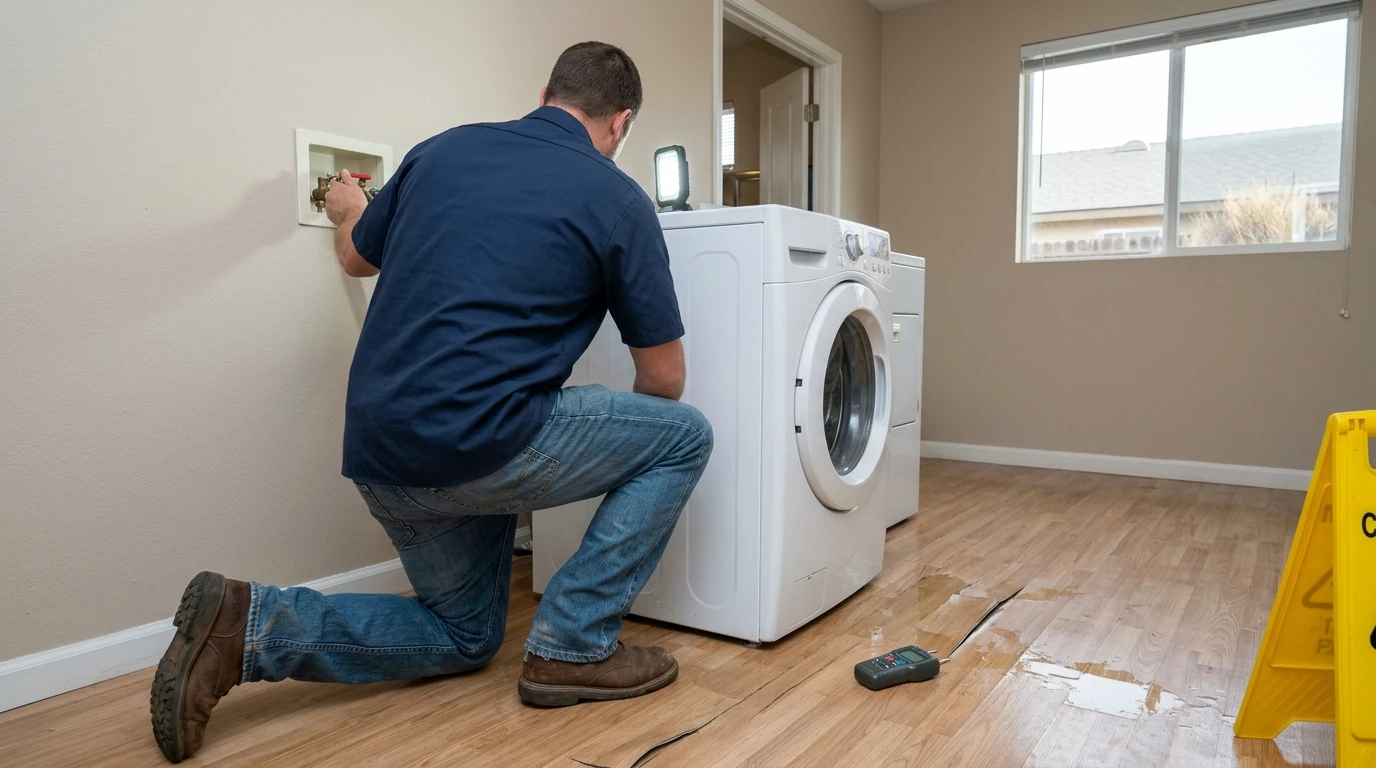
Shut off both water supply valves behind the machine first, then unplug the unit at the wall. Most washers sit on a pair of hot and cold valves mounted in the wall or a recessed box; turning both clockwise stops the source even if the hose itself failed.
After the water is off, mop or wet-vac what you can reach, especially around baseboards where it wants to wick into the wall. Photograph the standing water, the hose or connection that failed, and any flooring that’s already starting to lift or buckle. That documentation matters for your insurance claim and for whoever scopes the drying job. Then make the call. Don’t wait to see if it dries on its own, especially on laminate or vinyl plank, which trap water underneath instead of letting it evaporate.
Where does the water spread that I can’t see?
Washing machine water travels under flooring and into wall cavities long before it’s visible on the surface. Laminate and vinyl plank are the worst offenders: water wicks between planks and pools underneath, where it sits against the subfloor out of sight. By the time you see cupping or lifting at the seams, the subfloor has often been wet for hours.
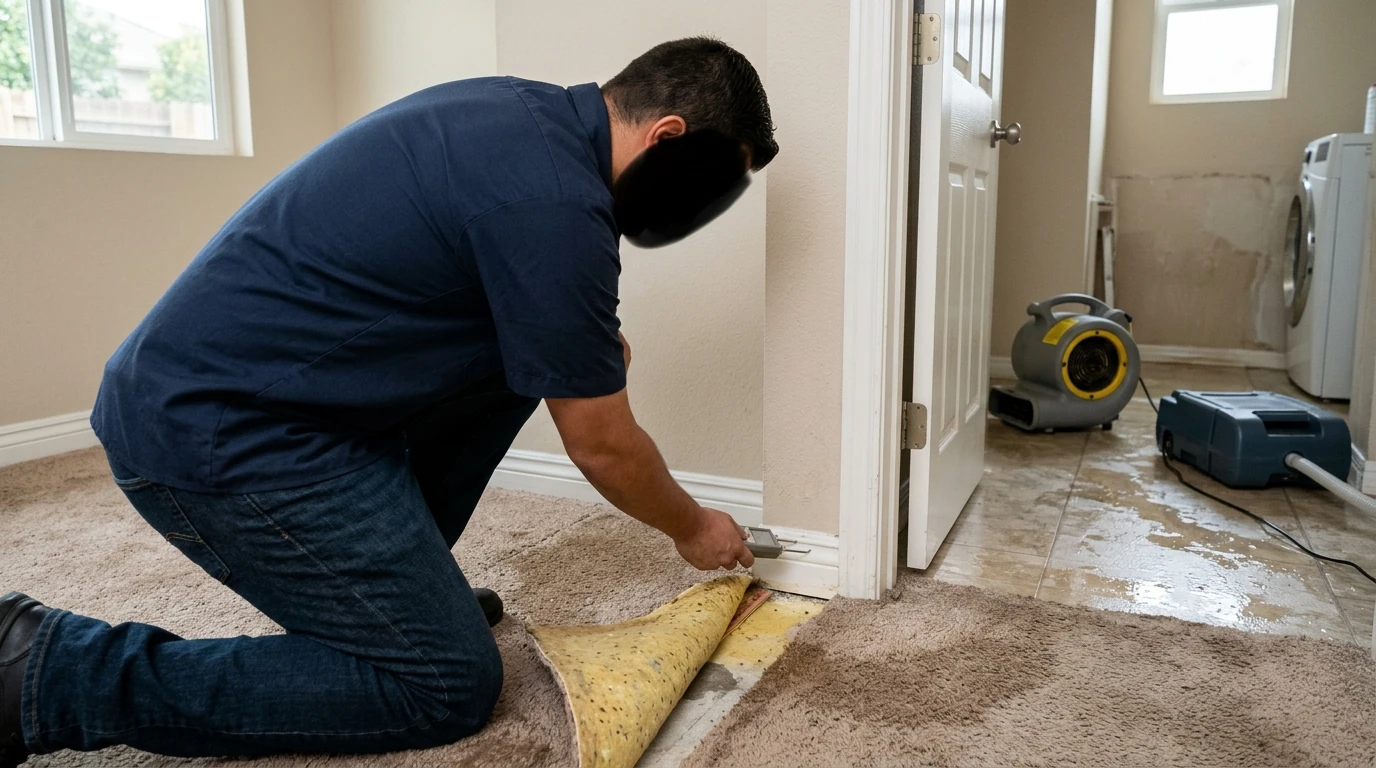
In an open-concept layout common in newer Rosedale and Riverlakes Ranch homes, water also travels sideways into an adjoining carpeted family room or hallway, soaking the pad before the carpet itself looks wet. And if the laundry is upstairs, which is common in two-story Stockdale Estates and Seven Oaks plans, gravity does the rest: water finds its way into the floor cavity and shows up as a stain on the ceiling below, sometimes a day later. A moisture meter reading at the baseboard, not a visual check, is the only reliable way to know how far it actually spread.
Can I just dry it myself with fans and towels?
A box fan and open windows are enough only if the water is caught within the first hour and never touched drywall, carpet pad, or a wall cavity. Past that point, surface drying leaves hidden moisture that EPA guidance on mold and moisture notes can start growing visible mold within 24 to 48 hours.
Call a professional if water sat for more than a few hours before you found it, if drywall or carpet pad got wet, or if the leak happened in a second-story laundry room where you can’t see what’s happening in the floor cavity below. A restoration crew uses a moisture meter to map the actual wet area, not just what’s visible, then sets extraction and drying equipment sized to the room, not a rental shop vac and a fan from the garage. For more on how a similar first-hour response plays out, see our burst pipe emergency checklist.
The single best prevention step for next time: replace rubber washing machine hoses with braided stainless steel ones. Rubber hoses are the most common point of failure and typically need replacing every five years; braided steel hoses resist the bursts that cause most of these floods in the first place.
If you’re already past the first hour and the laundry room floor is lifting, don’t wait on an estimate. Call ProRestoration Services at (661) 393-9306 to get a crew assessing the extent of the water before it reaches the subfloor underneath the rest of the house.
About ProRestoration Services
ProRestoration Services is an IICRC certified, CSLB licensed restoration company (License #960566) serving Bakersfield, CA and Kern County since it opened, with a 4.8 Google rating across 137 reviews. The team handles water damage restoration, appliance leak cleanup, emergency water removal, and carpet cleaning, working alongside sister company All Pro Plumbing so a single call covers both the repair and the restoration.
Video Transcript
You walk into the laundry room and find water creeping toward the hallway. Every towel in the house will not fix this. Water is already moving under the baseboards and into places you cannot see, spreading the longer you wait. Call a restoration company that handles water extraction and structural drying, not just mop-up. ProRestoration Services runs 24/7 in Bakersfield and is IICRC certified. If the hose or valve failed, a plumber may need to replace it too. All Pro Plumbing, ProRestoration’s sister company, can handle that the same day. Is the water clean or contaminated? A burst supply hose is clean water, but an overflow from the machine is gray water. Gray water carries detergent and soil, so carpet pad under a laundry room often needs replacing, not just drying. Shut off both water valves behind the machine, then unplug the unit. Turning them clockwise stops the source even if the hose failed. Mop up what you can reach, then photograph the standing water and any flooring starting to lift. That documentation helps support your insurance claim. If water sat for hours, soaked drywall or pad, or flooded an upstairs laundry room, towels and a fan won’t dry it. Don’t wait to see if it dries on its own. Call ProRestoration Services at (661) 393-9306 to schedule an assessment.