In Bakersfield, CA, water damage restoration typically costs $3.75 to $7.50 per square foot of affected space, or about $1,500 to $7,500 for a single-room loss. A whole-floor flood can run $10,000 to $25,000 or more. The biggest factor is the water category, clean, gray, or black, followed by how much drywall, flooring, and insulation has to come out before drying can start.
If a slab leak just soaked the hallway carpet in your Oleander bungalow, or a washing machine hose let go in a Rosedale laundry room, the number you actually care about is what shows up on the invoice once the water is gone. Bakersfield’s slab-on-grade construction and famously hard water make slab leaks and failed supply lines the most common water-damage call in Kern County, and the final price depends heavily on which category of water you’re dealing with and how fast mitigation starts.
How much does water damage restoration cost per square foot in Bakersfield?
Most Bakersfield water damage jobs run $3.75 to $7.50 per square foot of affected floor space, with clean-water losses at the low end and sewage or black-water losses at the high end because of the extra demolition and disinfection required.
| Scenario | Typical Cost Range |
|---|---|
| Category 1 (clean water), single room, carpet only | $1,500 - $3,000 |
| Category 1, single room with drywall removal | $2,500 - $4,500 |
| Category 2 (gray water), multi-room, appliance or plumbing failure | $4,000 - $8,000 |
| Category 3 (black water), sewage backup, single room | $5,000 - $10,000+ |
| Whole-floor flooding, 1,000+ sq ft, Category 2/3 | $10,000 - $25,000+ |
| Slab leak with structural drying and flooring replacement | $6,000 - $15,000 |
Kern County’s dry, triple-digit summers are one of the few breaks homeowners get here. Lower ambient humidity lets air movers and dehumidifiers pull moisture out of drywall and subfloor faster than they would in a coastal market, which can shave a day or two off the drying phase and keep labor hours, and the bill, lower. Winter tule fog season runs more humid, so drying times, and cost, creep up slightly between December and February.
What drives water damage costs up or down?
Four things move the price most: the water category, how many square feet and which materials got wet, how fast mitigation started, and whether materials have to be replaced instead of just dried.
- Water category. The ANSI/IICRC S500 standard classifies water as Category 1 (clean supply-line water), Category 2 (gray water from appliances or sump backups), or Category 3 (black water from sewage or flooding). Category 3 drives cost up because contaminated materials like carpet pad and baseboard usually get discarded rather than dried.
- Class of loss. How much of the material absorbed water matters. A damp patch of carpet dries faster and cheaper than saturated plaster or a hardwood subfloor that needs specialty drying mats.
- Response time. Water sitting more than 24 to 48 hours gives mold a window to start growing, which can add a separate remediation line item to the invoice.
- Code upgrades. Pre-1970 homes in Oleander, Westchester, and East Bakersfield often still run galvanized supply pipe or cast-iron drains. Replacing a failed section to current code is work the original plumbing never required, and it adds to the bill.
What does homeowners insurance cover versus my deductible?
Most homeowners policies cover sudden, accidental water damage, like a burst pipe or a failed water heater, but they exclude damage from a slow leak or deferred maintenance. You pay your deductible first, and the insurer covers the approved scope above it.
That distinction matters a lot in Bakersfield, where a slab leak can run for weeks under the foundation before anyone notices a warm spot on the floor. If an adjuster determines the leak was gradual rather than sudden, the water damage portion of the claim can be denied even if the pipe failure itself gets approved. The Insurance Information Institute has a plain-language breakdown of what standard policies typically include. For more on how that plays out claim by claim, see Does Homeowners Insurance Cover Water Damage?.
Documentation is what protects the claim either way: photos before anything is moved, moisture readings, and a written scope of work from whoever handles the mitigation.
What happens during a water damage restoration job?
A standard job runs through five phases: inspection and moisture mapping, water extraction, structural drying, monitoring, and reconstruction. Each phase is what you’re actually paying for on the invoice, not just a flat day rate.
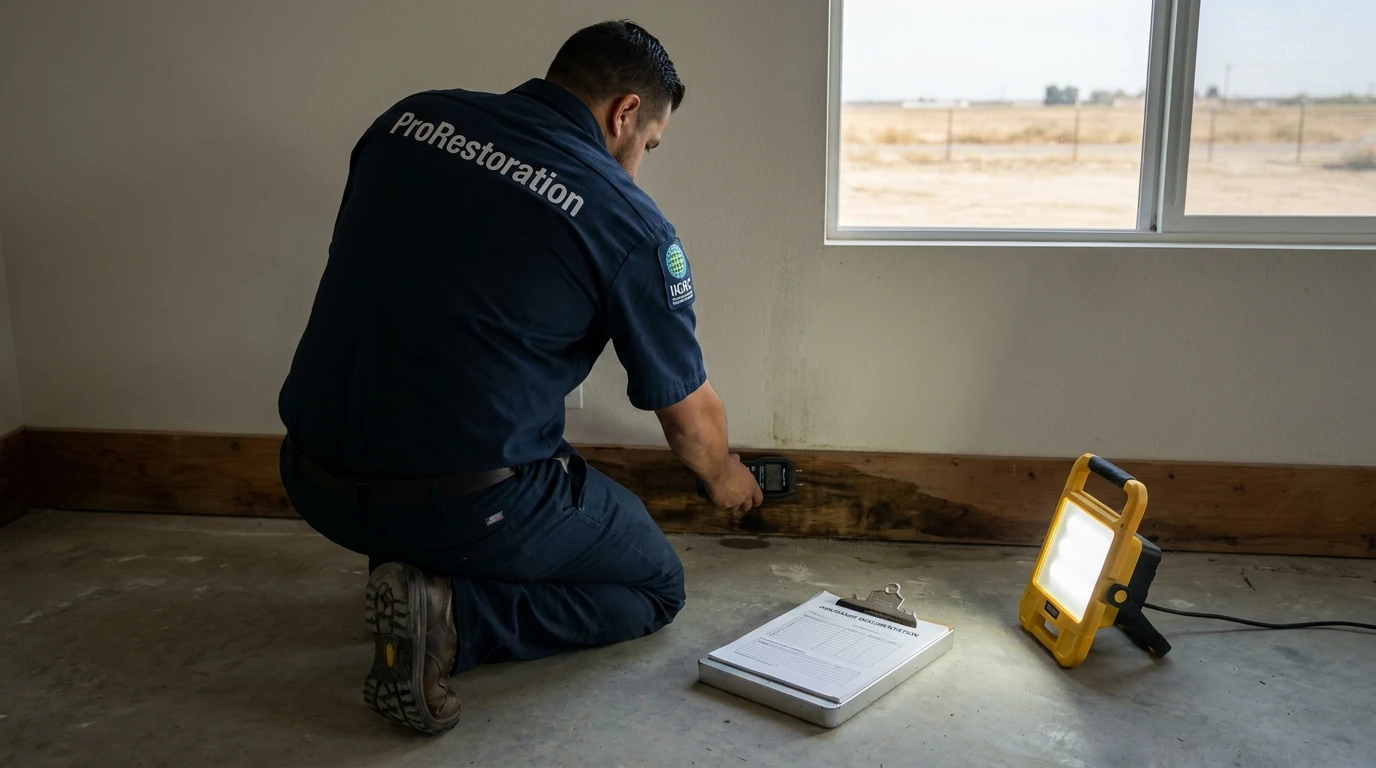
- Inspection. A technician uses a moisture meter and thermal imaging to map how far the water traveled behind walls and under flooring.
- Extraction. Standing water comes out with truck-mounted or portable extractors before drying equipment goes in.
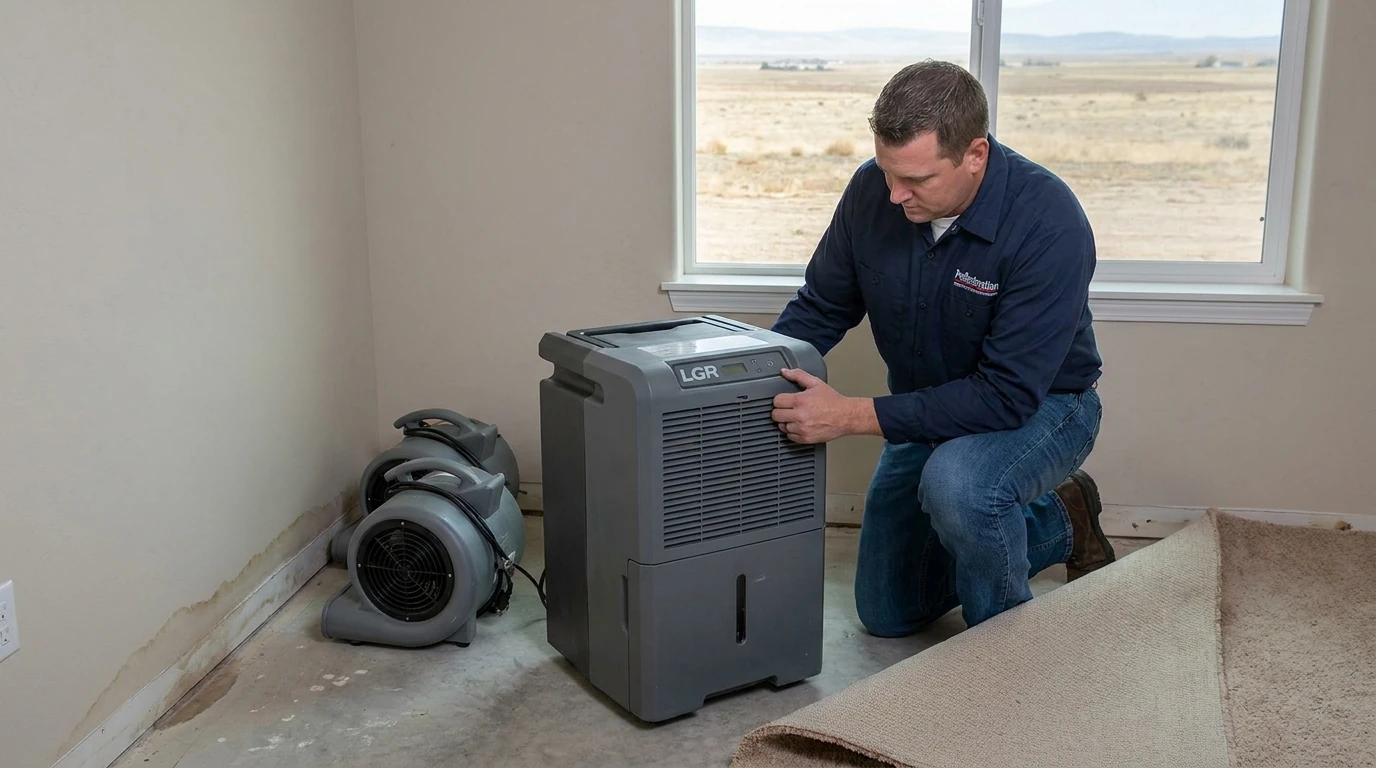
- Drying. Air movers and LGR dehumidifiers are set to the IICRC’s drying targets, with daily moisture checks until materials read dry.
- Monitoring. Readings get logged and shared, this log is also what supports the insurance claim.
- Reconstruction. Drywall, flooring, baseboard, and paint get put back once the structure tests dry.
For a closer look at how long each phase actually takes, see How Long Does Water Damage Restoration Actually Take?.
Who should I call first for water damage in Bakersfield?
Call a restoration company before a general contractor, and call a plumber immediately if water is still actively running. ProRestoration Services and its sister company, All Pro Plumbing, operate as one team, so a burst pipe gets shut off, the water gets extracted, and the structure gets dried and rebuilt without bringing in a second contractor or losing days coordinating between separate companies.
That’s the idea behind “One Call Does It All”: one phone call covers the plumbing repair, the mitigation, and the reconstruction, instead of three different vendors passing the job between them while the drywall sits wet.
Every water loss is different, and the ranges above are a starting point, not a quote. A written scope of work, done before demolition starts, is what protects both your wallet and your insurance claim. If the water is still active right now, start with What To Do in the First 24 Hours After Water Damage.
About ProRestoration Services
The company is an IICRC Certified Firm and EPA Lead-Safe Certified Firm serving Bakersfield, CA and Kern County, licensed through the Contractors State License Board (CSLB License #960566). Its crews handle water damage restoration, flood cleanup, burst pipe repair, mold remediation, fire and smoke restoration, and reconstruction, with 24/7 availability across Bakersfield, Oildale, Rosedale, Delano, and the surrounding Kern County communities.
Need help now? Call ProRestoration Services at (661) 393-9306.