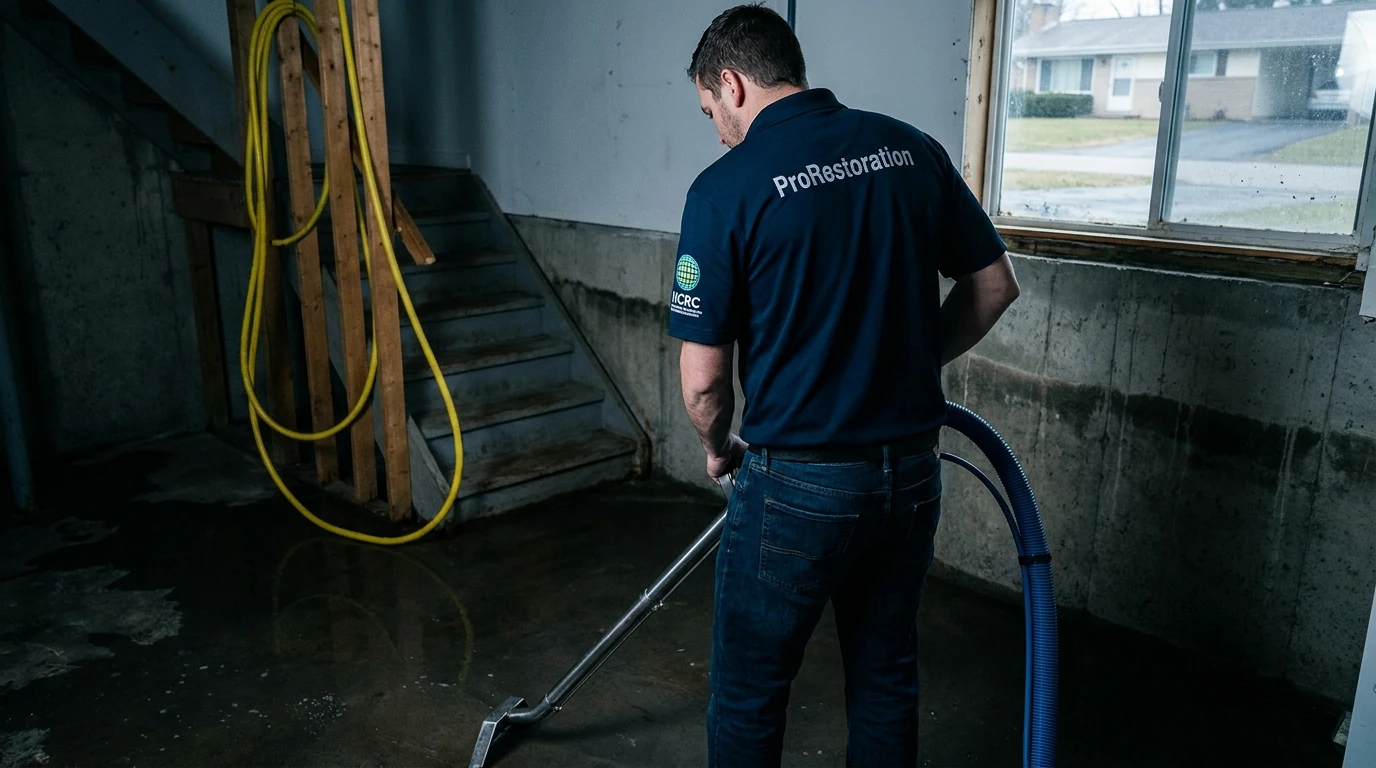
If your basement, cellar, or sunken family room just flooded in Bakersfield, call ProRestoration Services at (661) 393-9306. The crew runs 24/7, holds IICRC certification for water damage mitigation, and carries a 4.8-star Google rating across 122 local reviews. Before anyone arrives, cut power to any outlet or fixture near the water and stay out of it until you’re sure it isn’t energized.
Most Bakersfield homes are built slab-on-grade, so a true basement is uncommon outside older central neighborhoods like Westchester, Old Town, and the Oleander/Sunset area. Everywhere else, “basement flooded” usually means a below-grade laundry room, a sunken living room, or a crawl space that’s taken on water. Everything below applies to all of those spaces, and to the water-damage-restoration work either way.
Who do you call first, a plumber, a restoration crew, or 911?
Who you call first depends on whether the water is still flowing and what’s in it. A still-running leak needs a plumber first. Standing water from a source that’s already stopped needs a restoration crew directly. An electrical or gas hazard near the water needs 911 or your utility before anyone touches anything.
- Water is still actively flowing (burst pipe, failed water heater, split supply line): get it shut off at the source first. ProRestoration Services’ sister company, All Pro Plumbing, handles that under the same “One Call Does It All” promise, one phone call stops the leak and starts the water damage restoration with the same team, no second contractor to track down.
- Source is already stopped, water is just sitting there: skip the plumber and call ProRestoration Services directly for water damage restoration and extraction.
- Exposed wiring, sparking outlets, or a gas smell near the water: call 911 or your utility first and stay out of the space entirely.
- Dark water, a sewage odor, or a backed-up toilet feeding the flood: this is Category 3 water under the IICRC S500 standard, grossly contaminated, and it’s a job for sewage cleanup, not a wet-vac.
Does it matter what kind of water is in the basement?
Yes. The water’s source changes both the health risk and the cleanup method, which is why dispatch asks about it on the first call.
A failed water heater, a burst clean supply line, or an overflowing clean fixture is Category 1 water, sanitary at the source, though it starts picking up contaminants the longer it sits on carpet, drywall, or exposed crawl space soil.
Groundwater seeping through a foundation crack under hydrostatic pressure, or discharge from a washing machine or dishwasher, is Category 2, contaminated enough that affected porous materials usually get removed rather than dried in place.
Storm runoff that pools against the foundation and flows in over a sill plate, through a window well, or through a crack during heavy rain is a different animal: that’s surface water, Category 3, and it carries soil, fertilizer, and street debris with it. So does any backup from a sewer line or floor drain beyond the trap. Both call for full PPE and antimicrobial treatment, covered in more detail in our sewage backup guide.
What happens when you call ProRestoration Services?
A call starts with a few quick questions, then a crew arrives with equipment matched to what you’ve described.
Have ready: your address, roughly how long the area’s been wet, whether the source is still running, and a few photos taken from the doorway (don’t wade in for a photo). That lets dispatch send the right gear, truck-mounted extractors and LGR dehumidifiers for a clean-water job, or containment and respirators for a sewage call, on the first trip.
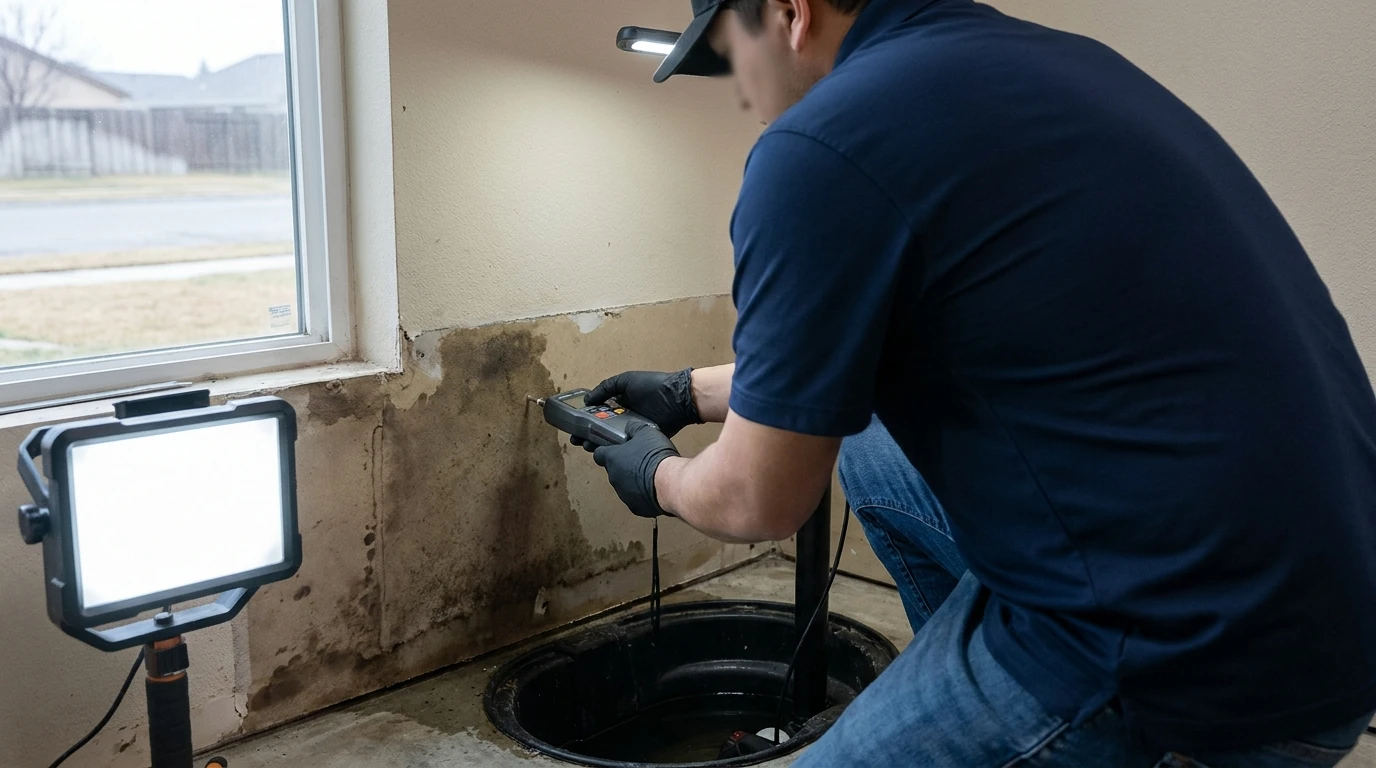
On site, the crew checks for electrical hazards, confirms the water category, runs emergency water removal, and sets moisture meters into the walls and subfloor to map how far the water traveled, usually farther than the visible wet line. Affected baseboards, drywall, or flooring that can’t be dried in place get pulled at this stage. If a pipe or fixture still needs repair, All Pro Plumbing handles that under the same visit.
What should you do before the crew arrives?
The job before help arrives is staying safe and documenting the damage, not cleaning it up. Cut power to the affected circuit at the breaker if you can reach it safely, keep kids and pets out of the space, and take wide photos of the flooding and any visible source (a pipe, an appliance, a window well) for the claim.
Don’t run a shop vac through water that smells like sewage, and don’t stack wet boxes or furniture against drywall, that locks moisture against the wall and speeds up mold, which the EPA notes can start growing within 24 to 48 hours on wet materials. Our guide on how quickly mold grows after water damage covers that window in more depth, and it’s worth a read while you wait for the crew, especially heading into Bakersfield’s wetter winter months when a flooded basement can sit unnoticed longer in a seasonal rental or a back room.
Will homeowners insurance cover a flooded basement?
Most homeowners policies cover sudden, accidental water damage from inside the home, like a burst pipe or a failed water heater, but they typically exclude gradual leaks and flood water.
A sewer backup or a sump pump failure is only covered when the policy carries a water backup endorsement; without it, that type of loss is usually denied. Storm runoff or rising groundwater is generally treated as flood, which standard homeowners insurance doesn’t cover at all, that needs a separate flood policy through the NFIP or a private insurer. The California Department of Insurance’s residential guides walk through what a standard policy does and doesn’t include. For the fuller breakdown, see our guide on whether homeowners insurance covers water damage. Either way, photos and a written scope of work from the restoration crew protect the claim, which is part of why documentation happens before demolition starts, not after.
If water is sitting in your basement right now, call ProRestoration Services at (661) 393-9306 and tell them what you’re seeing. One call gets a plumber if the source is still running, a restoration crew for the water, and a path to mold remediation if it’s been more than a day or two, all from the same team.
About ProRestoration Services
ProRestoration Services is an IICRC-certified, CSLB-licensed (#960566) restoration company serving Bakersfield and Kern County, with sister company All Pro Plumbing handling plumbing repairs under the same “One Call Does It All” model. Their crews run water damage restoration, sewage cleanup, and mold remediation across the region, backed by a 4.8-star Google rating from 122 local reviews.