TL;DR: A good water leak detection company in Bakersfield uses acoustic listening equipment, thermal imaging, and moisture meters to find a leak without tearing out your slab or walls, hands you a written report with photos and a marked location, and is licensed through the CSLB. On Bakersfield’s slab-on-grade homes, slab leaks are common enough that the detection step often matters more than the repair itself. The strongest option is a company that can find the leak, fix the plumbing, and dry out the damage, all under one call.
If your water bill jumped $60 to $150 this month with no new appliance or sprinkler schedule to explain it, or you’ve got a warm patch on the tile floor you can’t account for, you’re probably dealing with a hidden leak, and in Bakersfield that usually means a slab leak. Slab-on-grade construction plus the valley’s very hard water means copper supply lines corrode from the inside out, and by the time you notice a sign, water has often been moving under your foundation for weeks. The company you call next determines whether this costs you a afternoon or a demolished kitchen floor.
How do you tell a good leak detection company from a mediocre one?
The difference is whether they find the leak without guessing, and whether they hand you something in writing. A company worth hiring uses at least two independent detection methods (acoustic plus thermal, or thermal plus moisture mapping) to cross-check the leak’s location before anyone touches a wall or a slab.
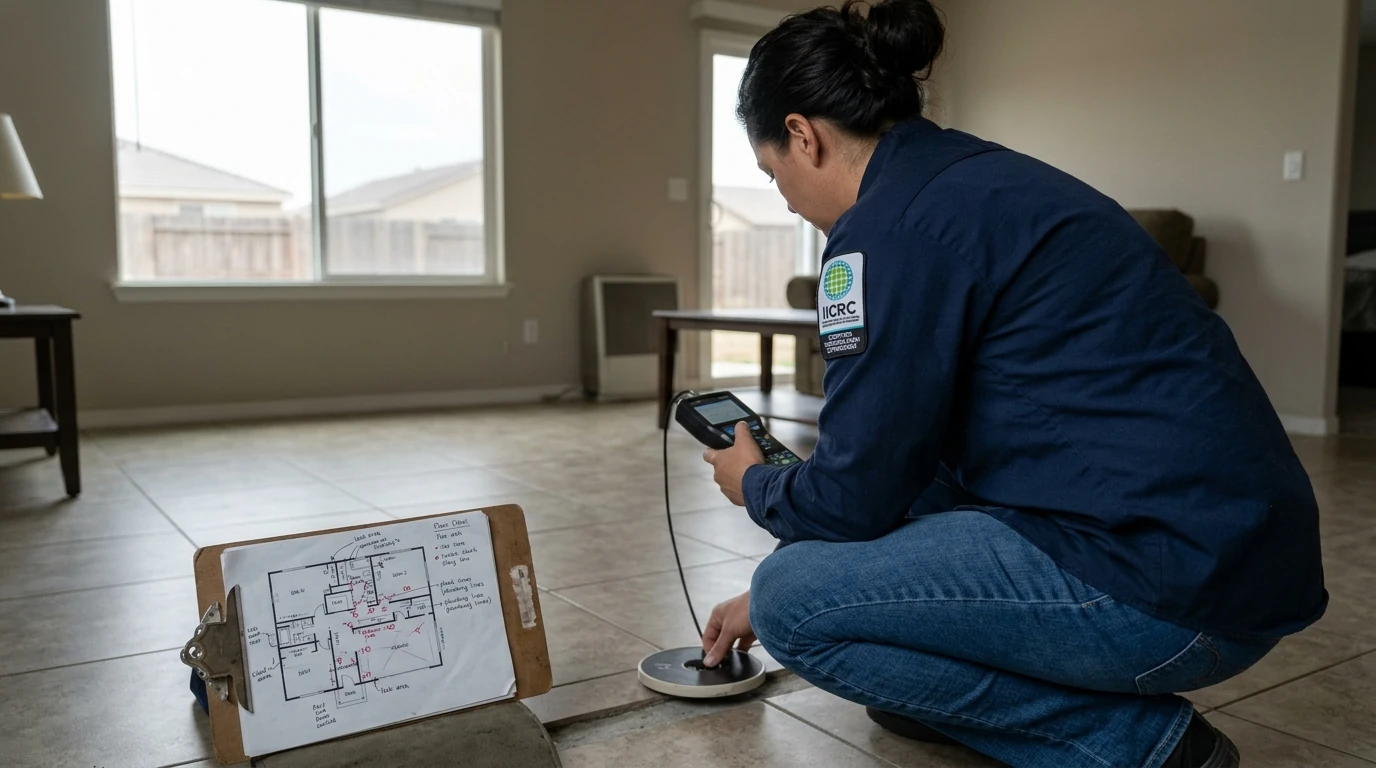
Ask two questions before you book anyone: what equipment do you actually bring to the job, and do I get a written report. A tech who shows up with only a moisture meter and “a good ear” is guessing at where to cut. A company that brings acoustic listening discs, an infrared thermal camera, and a pressure gauge, then backs it up with a dated report and photos marking the leak location, is giving you something you can hand to your insurance adjuster or your plumber.
Licensing matters here too. California requires a contractor’s license for this kind of work, and you can verify any company’s status directly through the CSLB license lookup before you let them near your plumbing. ProRestoration Services holds CSLB license #960566, and that number is checkable the same way.
What equipment should a real leak detection inspection include?
A non-invasive inspection should combine acoustic detection, thermal imaging, and moisture readings rather than relying on any one tool alone. Each method catches something the others miss, which is why cross-checking matters more than any single gadget.
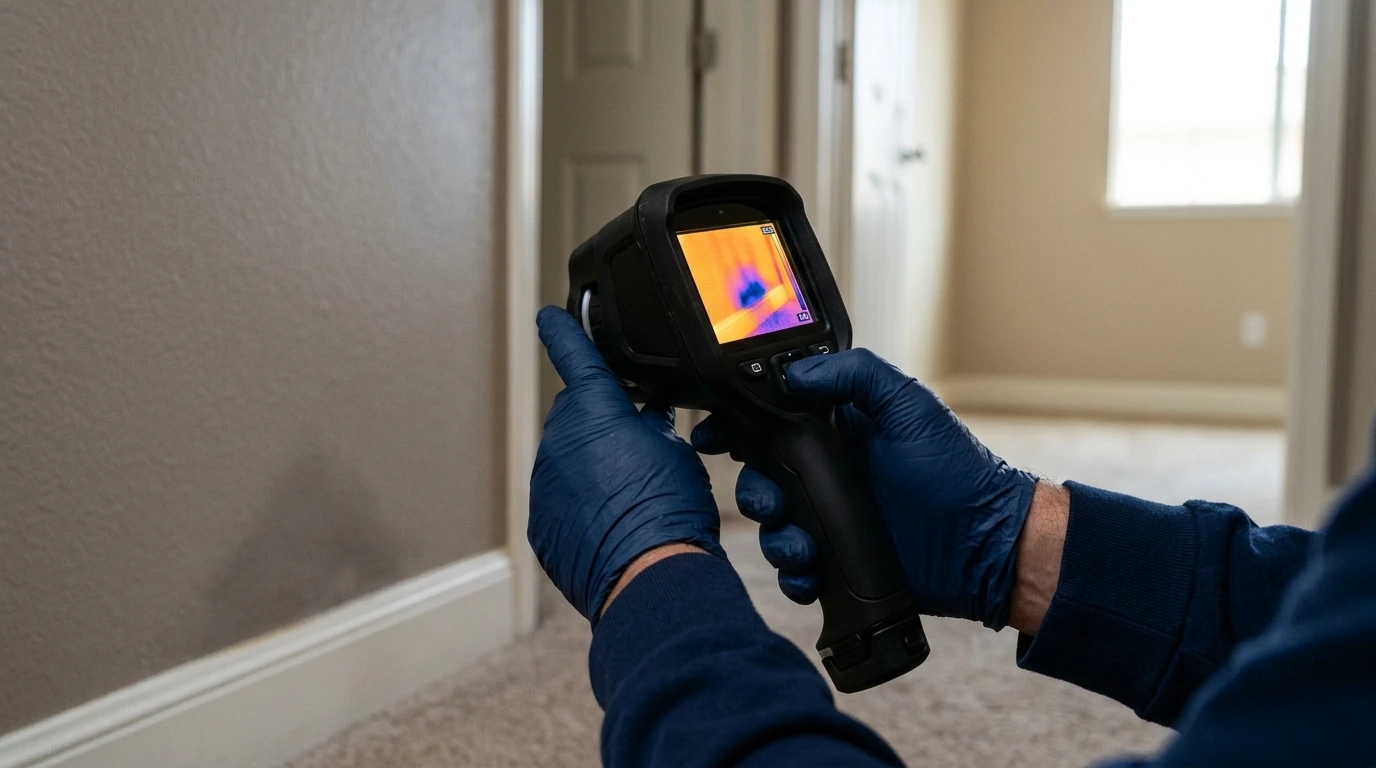
Acoustic equipment listens for the distinct sound of pressurized water escaping a pipe, amplified through concrete or copper, and lets a technician narrow a leak to a few feet of slab without cutting anything. Thermal imaging cameras read surface temperature differences, since water migrating under a slab or inside a wall cavity often shows up as a cooler (or warmer, on a hot-water line) patch invisible to the eye. Moisture meters then confirm the find by measuring actual moisture content in the flooring or drywall at that spot. Video pipe inspection cameras come into play for drain-line and sewer-lateral leaks rather than supply-line leaks.
None of this requires jackhammering your living room floor to find out where the problem is. The destructive part, if there is one, should only happen at the confirmed location, not as an exploratory exercise.
What are the signs of a hidden water leak in a Bakersfield home?
A water bill that climbs without an obvious reason is usually the first and most reliable signal of a hidden leak. Most Bakersfield water bills run fairly steady month to month outside of summer irrigation, so a jump during a non-irrigation period deserves a second look.
Other signs worth paying attention to: a warm spot on an otherwise cool tile or concrete floor (a sign of a hot-water line leak under the slab), the sound of running water when every fixture is off, a musty smell with no visible source, cracked or lifting flooring near an exterior wall, or a water meter dial that keeps spinning with all fixtures closed. In older homes in Oleander, Westchester, and East Bakersfield, original galvanized supply lines add a second failure point on top of the slab-leak risk, so an unexplained drop in water pressure at one fixture is also worth investigating.
None of these signs confirm a leak on their own, which is exactly why a proper inspection with real equipment beats guessing from symptoms alone.
Should you hire one company for detection, repair, and drying, or three separate contractors?
One company handling detection, the plumbing repair, and the water damage drying saves you from re-explaining the problem three times and from gaps between contractors where nobody owns the job. That coordination also tends to move faster, since nobody is waiting on someone else’s schedule to start.
Most standalone leak detection outfits find the leak and then hand you off; you still need to find a plumber for the repair and a separate restoration company if drywall, flooring, or a slab got wet. ProRestoration Services works alongside its sister company, All Pro Plumbing, so the same team that finds the leak can also fix the pipe and dry the structure, one call, one point of contact, no second contractor to vet. If a slab leak has already soaked flooring or wall framing, that same visit can also start the water damage assessment instead of scheduling a second company a week later.
For the plumbing repair side specifically, see burst pipe repair; for what happens once water has already reached your drywall or flooring, see water damage restoration. And if the leak turns out to be under the foundation itself, slab leak repair costs in Bakersfield typically scale with how long the leak ran before it was found, which is the whole argument for catching it early.
What should a leak detection report actually include?
A usable report names the leak’s likely location, the method used to find it, and photos documenting both the finding and the pre-repair condition. That written record is what your insurance adjuster or your next contractor will actually reference, not a verbal “it’s somewhere under the kitchen.”
At minimum, expect a diagram or marked photo of the suspected leak location, the equipment readings that led to that conclusion, and a plain-language recommendation for next steps, whether that’s a spot repair, a full re-pipe, or further investigation. If the company can’t produce something like this, they’re asking you to trust a guess.
Finding the leak accurately the first time keeps the repair small. Guessing wrong, or skipping the detection step and going straight to demolition, turns a contained job into an expensive one.
About ProRestoration Services
ProRestoration Services is an IICRC-certified, CSLB-licensed company (license #960566) serving Bakersfield and Kern County, operating 24/7. Working alongside its sister company, All Pro Plumbing, the team handles water leak detection, burst pipe and appliance leak repair, and the full water damage restoration that follows, one call covering plumbing, detection, and drying instead of three separate contractors.
Need help now? Call ProRestoration Services at (661) 393-9306.