TL;DR: Biohazard cleanup in Bakersfield typically costs between $1,500 and $25,000, depending on the size of the affected area, the type of contamination, and how much material has to be removed and disposed of as regulated waste. Small, contained jobs land at the low end; large-loss situations involving structural removal and a full rebuild land at the high end. Most companies price the job as a flat scoped project, not an hourly rate, because disposal, PPE, and disinfection steps don’t map cleanly to hours worked.
If you’re dealing with the aftermath of an unattended death, a crime scene, a sewage backup, or another biohazard situation in a Bakersfield home, you’re probably trying to get a straight answer on price before you call anyone. That’s reasonable. This guide breaks down what biohazard cleanup actually costs in Kern County, what moves the number up or down, and what’s usually covered by insurance versus paid out of pocket.
How Much Does Biohazard Cleanup Cost in Bakersfield?
Most biohazard cleanup jobs in Bakersfield cost between $1,500 and $25,000, with the majority falling in the $2,500 to $8,000 range for a single affected room. The final price depends on contamination type, square footage, and how many materials have to be removed rather than disinfected in place.
| Scenario | Typical Cost Range |
|---|---|
| Limited contamination, single room (small blood/fluid area, surfaces only) | $1,500 - $4,000 |
| Moderate contamination, one room with porous material removal (carpet, subfloor, drywall) | $3,500 - $8,000 |
| Sewage backup with biohazard contamination (Category 3 water) | $3,000 - $7,500 |
| Multi-room or whole-unit contamination | $8,000 - $15,000 |
| Hoarding situation combined with biohazard and odor remediation | $6,000 - $15,000 |
| Large-loss event requiring structural demolition and reconstruction | $10,000 - $25,000+ |
These are typical industry ranges for this type of work in Kern County, not a quote. Every scene is different, which is why a written scope after an on-site assessment is the only reliable number for your specific situation.
What Drives the Cost of a Biohazard Cleanup Job?
The price moves based on five main factors: contamination category, square footage affected, how much material must be removed versus disinfected, disposal volume, and whether the structure needs rebuilding afterward.
Contamination type and category. A situation involving bodily fluids, an unattended death, or a crime scene requires EPA-registered disinfectants, specialized waste handling, and often full PPE including Tyvek suits and respirators. Sewage backups fall under ANSI/IICRC S500 water category guidelines, and any backup from beyond the trap, including sewer and drain backups, is Category 3, meaning porous materials in contact with it usually get removed rather than dried in place.
Square footage and surfaces affected. A contained bathroom incident costs far less than a situation that has spread across carpet, subfloor, and adjoining rooms. Hard, non-porous surfaces (tile, sealed concrete, metal) can often be disinfected and kept. Porous materials, carpet, carpet pad, drywall, upholstered furniture, usually cannot be fully decontaminated and get removed and disposed of as regulated medical or biohazard waste, which adds disposal fees most people don’t anticipate.
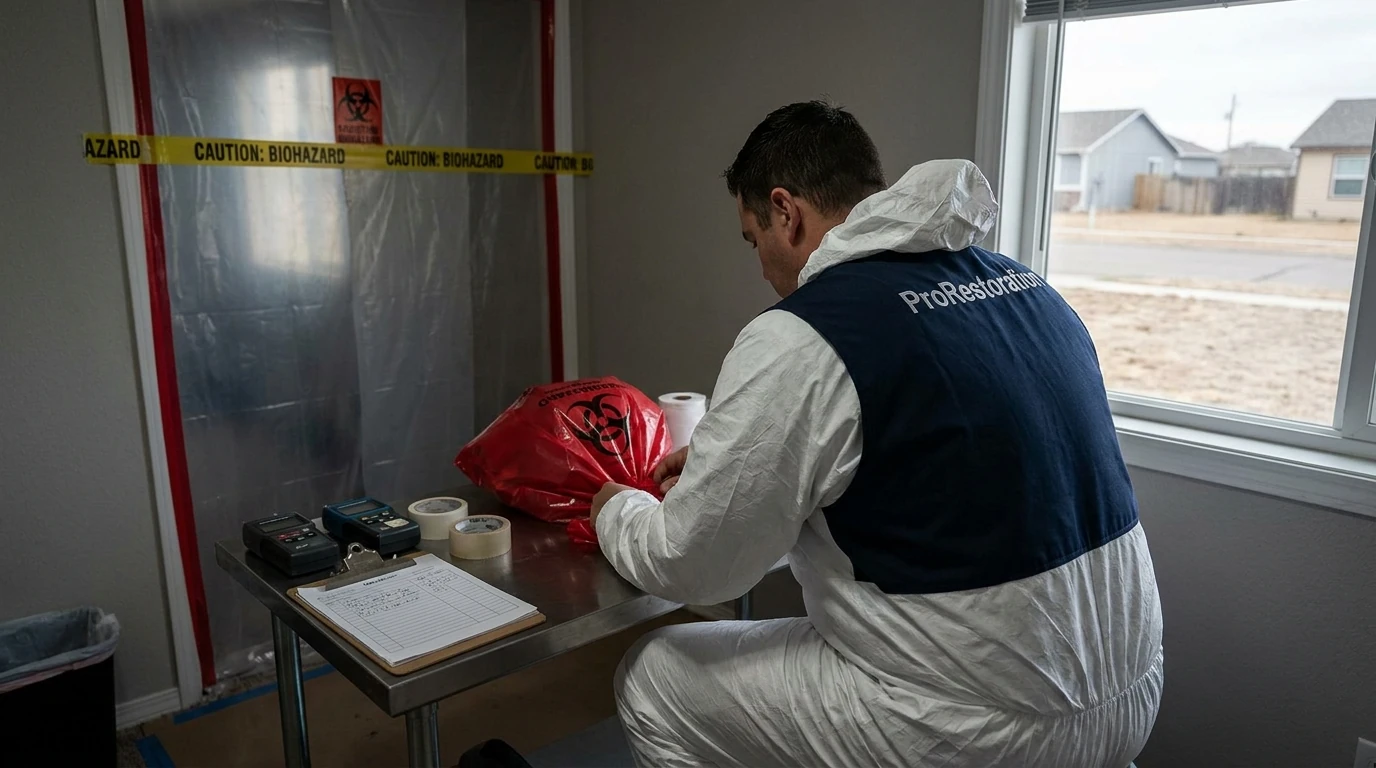
Disposal and documentation. Biohazard waste can’t go in a regular dumpster. It has to be bagged, labeled, and transported by a licensed hauler to an approved disposal facility, and that chain-of-custody documentation is part of the job, not an optional add-on.
Reconstruction needs. If drywall, flooring, or framing was removed, rebuilding that space is a separate phase billed on top of the cleanup itself. This is where the client’s reconstruction crew typically picks up the job after the biohazard and sewage cleanup work is complete.
Is Biohazard Cleanup Billed by the Hour?
Most biohazard cleanup jobs are billed as a flat scoped project price, not an hourly rate, because the work includes fixed costs like disposal fees, specialty disinfectants, and PPE that don’t scale cleanly with hours on site. When a job is small enough to time and materials, technician labor commonly runs in the $75 to $150 per hour range per technician, with disposal, equipment, and PPE costs billed separately on top of labor.
Pricing is also consistent across the restoration industry generally, because the cost drivers (disposal, PPE, disinfection protocol, documentation) are the same regardless of which licensed company does the work. The number you should be comparing between companies is the written scope, not a quoted hourly rate.
Does Homeowners Insurance Cover Biohazard Cleanup?
Coverage depends on the cause of the loss and the exact wording of your policy, so there is no single yes-or-no answer. Sudden, accidental events, like a sewage backup from a failed line, may be covered if your policy includes a water backup endorsement; a biohazard cleanup tied to a crime or an unattended death is handled differently and often falls under a separate provision or isn’t addressed at all in a standard policy.
A few patterns to check on your declarations page: a sewage or drain backup needs the water backup (sewer/sump) endorsement specifically, it is rarely automatic on a standard policy. Trauma or crime-related biohazard cleanup coverage varies widely by carrier and sometimes only applies if tied to a covered peril like fire. The California Department of Insurance’s residential property claims guide walks through how to read your policy and file a claim correctly, which is worth doing before you assume either way.
If the incident followed a sewage backup that also caused separate water damage, our post on what to do after a sewage backup covers the water-damage side of that claim in more detail.
Who Pays for Biohazard Cleanup When There’s No Insurance Coverage?
When insurance doesn’t apply, the property owner typically pays out of pocket, though some situations have other resources worth checking first. If the incident is tied to a crime, ask the responding detective or a victim advocate whether a state victim services fund covers cleanup costs; some do, and it costs nothing to ask before paying out of pocket.
For landlords and property managers, the lease and local tenant law sometimes determine who’s financially responsible, particularly for hoarding-related or long-term neglect situations. A written, itemized scope upfront protects everyone involved regardless of who ends up paying, because it documents exactly what was contaminated, what was removed, and why.
What Happens During a Biohazard Cleanup Job?
A biohazard cleanup follows a defined sequence: assessment and containment, PPE and site prep, removal of affected materials, disinfection, verification, and, when needed, rebuild.
- Assessment. A technician evaluates the contamination type and extent and writes a scope before any work starts.
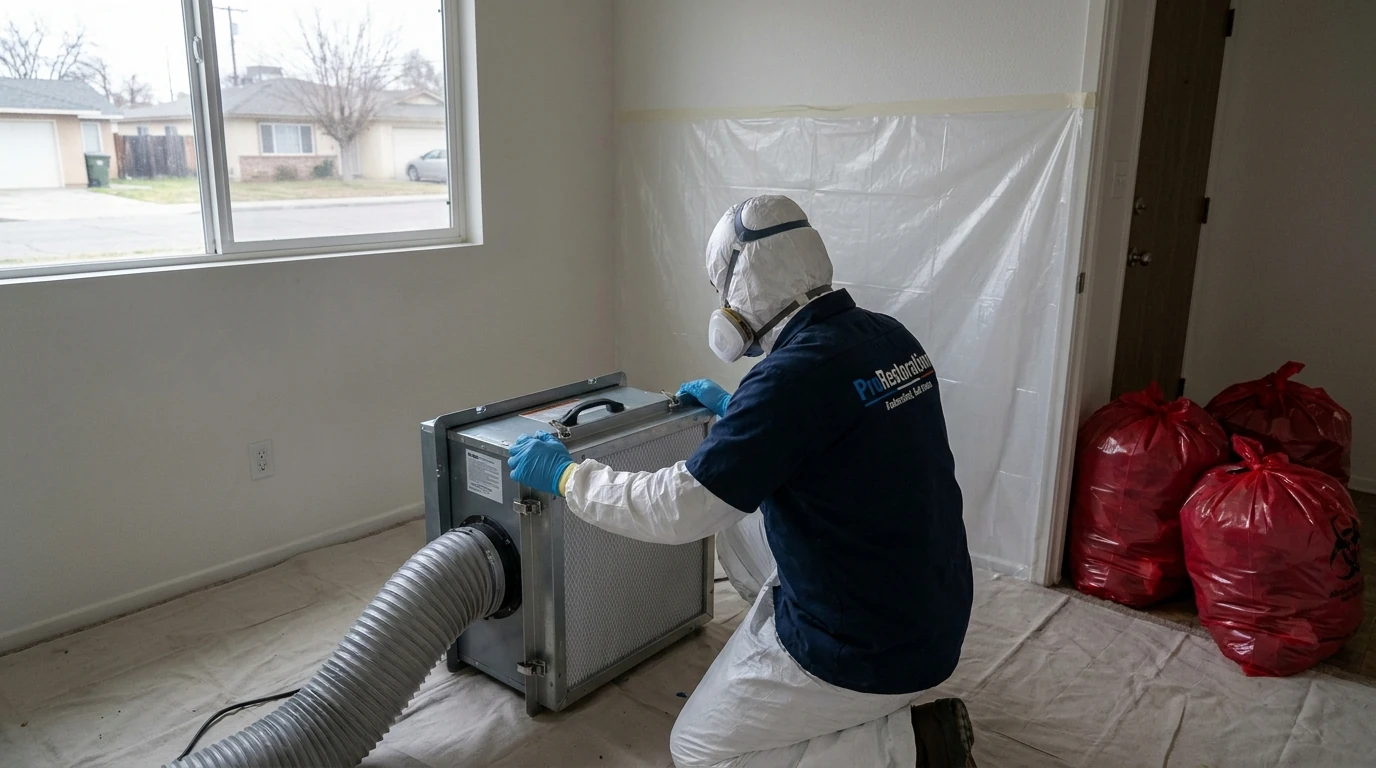
- Containment. The affected area is sealed off with poly sheeting to keep the job from spreading contamination to clean areas of the home.
- PPE and site prep. Crews suit up in Tyvek, gloves, and respirators appropriate to the contamination level, following protocols consistent with OSHA’s bloodborne pathogen standard.
- Removal. Porous materials that can’t be safely disinfected, carpet, padding, drywall, affected furniture, are removed and bagged as regulated waste.
- Disinfection. Remaining surfaces are treated with EPA-registered disinfectants, following protocols consistent with the ANSI/IICRC S540 standard for trauma and crime scene cleanup.
- Disposal. Waste is transported by a licensed hauler to an approved facility, with documentation kept for insurance or legal purposes.
- Rebuild, if needed. Once the space is clear, drywall, flooring, and finishes go back in. This is where reconstruction work typically begins.
Older Bakersfield neighborhoods like Oleander/Sunset and Westchester, with their original plumbing and cast-iron drain lines, see more sewage-related biohazard calls than newer construction, simply because those systems fail more often. A pipe failure that causes both water damage and a biohazard situation is exactly the kind of job where having one team handle the plumbing repair and the cleanup matters: ProRestoration Services and its sister company, All Pro Plumbing, work as one team under the same phone call, so a failed line gets fixed and the resulting mess gets cleaned up without bringing in a second contractor.
If you’re facing a biohazard situation in a Bakersfield home right now, the next step is a confidential on-site assessment and a written scope before anything is removed or disposed of. Call ProRestoration Services at (661) 393-9306 to arrange one.
About ProRestoration Services
ProRestoration Services is an IICRC Certified and EPA Lead-Safe Certified firm serving Bakersfield and Kern County, holding CSLB License #960566. The company is rated 4.8 stars across 119 Google reviews and is BBB Accredited. Its crews handle water damage, sewage cleanup, biohazard cleanup, odor removal, and reconstruction, working alongside sister company All Pro Plumbing under the “One Call Does It All” model so plumbing failures, cleanup, and rebuild are coordinated by a single team.